
Rosehip oil has become one of the most popular natural oils used in facial skincare. Extracted from the seeds of wild rose plants, this botanical oil is known for its lightweight texture and nutrient-rich composition.
Because it absorbs quickly and does not feel heavy on the skin, many people use rosehip oil for the face as part of their daily skincare routine. The oil contains essential fatty acids, antioxidants, and natural vitamin A compounds that may help support skin hydration and overall skin health.
Jump to Section
1. Rosehip Oil Benefits for the Face 2. Why Rosehip Oil Is Popular for Mature Skin 3. Recommended Rosehip Oils to Try 4. How to Use Rosehip Oil 5. Rosehip Oil Blends for Face 6. Effects of Using Rosehip oil 7. Rosehip Oil and Wrinkles 8. How to Choose the Best Rosehip Oil 9. Best Rosehip Oils for Skincare 10. Mistakes to AvoidFor this reason, rosehip oil is often included in natural beauty routines focused on hydration, glow, and supporting the appearance of smoother skin.
Today, rosehip oil appears in facial oils, serums, and botanical skincare blends designed to nourish and protect the skin.
1. Rosehip Oil Benefits for the Face
Rosehip oil for face has become popular in natural skincare routines because of its lightweight texture and nutrient-rich composition.
Supports hydration
Rosehip oil contains essential fatty acids such as linoleic acid and linolenic acid, which help support the skin barrier and reduce moisture loss.
May help improve the appearance of wrinkles
Rosehip oil contains antioxidants and natural vitamin A compounds that are often associated with skin renewal. Because of this, it is frequently used in skincare routines designed to support the appearance of smoother skin.
Supports skin repair
Many people include rosehip oil in skincare routines focused on skin recovery. Its nutrients may help support the skin’s natural regeneration processes.
Helps brighten dull skin
Regular use of rosehip oil may help improve the appearance of uneven skin tone and restore a natural glow.
2. Why Rosehip Oil Is Popular for Mature Skin
Rosehip oil is especially popular in routines designed for mature skin, because it provides nourishment without feeling heavy.
Unlike thicker oils, rosehip oil absorbs quickly into the skin while still delivering beneficial fatty acids and antioxidants.
Because of this balance, rosehip oil is often combined with other botanical ingredients such as immortelle oil, another plant oil commonly used in skincare routines for mature skin.
Who Should Use Rosehip Oil?
Rosehip oil is commonly used in skincare routines designed for:
• mature skin
• dry or dehydrated skin
• uneven skin tone
• dull skin lacking radiance
Because of its lightweight texture, it is suitable for many skin types.
3. Recommended Rosehip Oils to Try
If you want to try rosehip oil, choosing a high-quality cold-pressed oil makes a big difference.
These options are well-known for their purity and gentle formulation for facial skincare.
- Trilogy Certified Organic Rosehip Oil
Rich in essential fatty acids and antioxidants, this oil is one of the most popular choices for improving skin glow and elasticity. - Cliganic, Organic Rosehip Oil
A lightweight and affordable option that absorbs quickly and works well in nighttime skincare routines. - Life-flo Pure Rosehip Seed Oil
Cold-pressed and unrefined, this oil is known for supporting skin hydration and helping improve the appearance of fine lines.
4. How to Use Rosehip Oil on the Face
Rosehip oil can be incorporated into a skincare routine in several simple ways.
As a facial oil
Apply 2–3 drops of rosehip oil to clean, slightly damp skin and gently massage until absorbed.
In nighttime skincare routines
Many people prefer applying rosehip oil in the evening, when the skin naturally undergoes overnight recovery processes.
Mixed with other botanical oils
Combining rosehip oil with other botanical oils is one of the easiest ways to create simple natural facial oils for daily skincare.
5. Rosehip Oil Blends for Face: Botanical Oils That Work Well Together
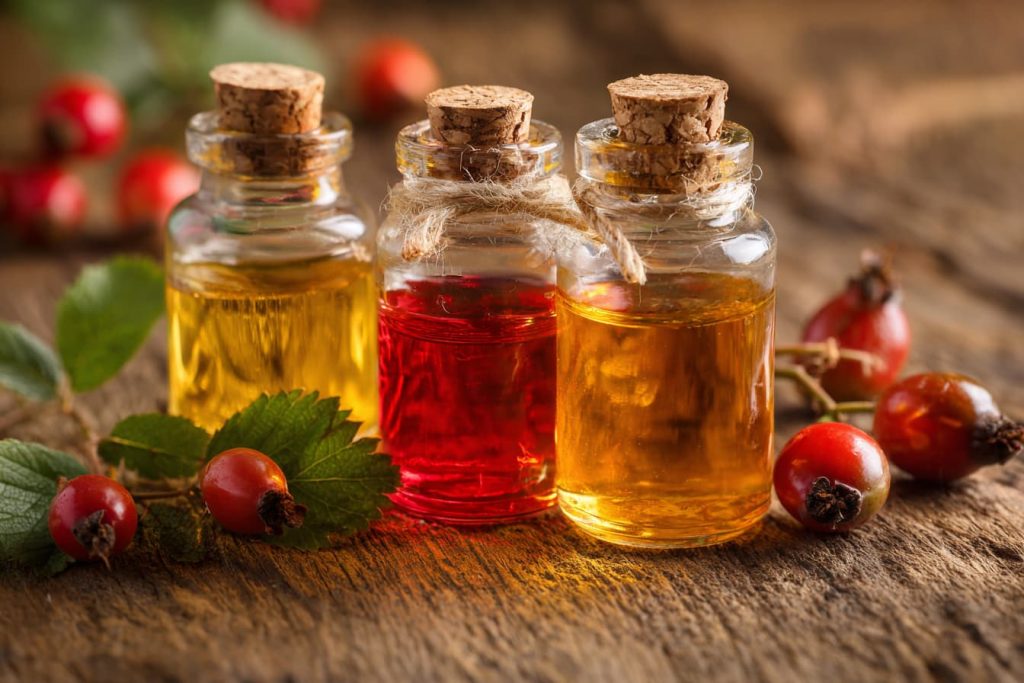
Rosehip oil works particularly well as a base oil in facial blends, because it absorbs quickly and pairs well with other botanical oils. When combined with complementary oils, it can support hydration, skin repair, and a healthy glow.
Below are a few simple blends commonly used in natural skincare routines.
Rosehip + Immortelle Oil
For mature skin and skin recovery
Immortelle (helichrysum) oil is often used in skincare routines focused on calming the skin and supporting skin renewal. When combined with rosehip oil, the blend creates a lightweight facial oil suitable for mature skin.
Blend
• 1 tablespoon rosehip oil
• 1 tablespoon jojoba oil
• 2–3 drops immortelle essential oil
Use a few drops in the evening after cleansing.
Rosehip + Jojoba Oil
For balanced everyday facial care
Jojoba oil closely resembles the skin’s natural sebum, making it an excellent oil for balancing moisture levels.
Blend
• 1 tablespoon rosehip oil
• 1 tablespoon jojoba oil
This simple combination creates a lightweight facial oil suitable for daily use.
Rosehip + Argan Oil
For dry or dehydrated skin
Argan oil contains vitamin E and fatty acids that support hydration and softness.
Blend
• 1 tablespoon rosehip oil
• 1 tablespoon argan oil
This blend is often used as a nighttime facial oil to help restore moisture.
Rosehip + Marula Oil
For skin softness and glow
Marula oil is known for its silky texture and antioxidant content. It absorbs quickly and helps the skin feel smooth and nourished.
Blend
• 1 tablespoon rosehip oil
• 1 tablespoon marula oil
This combination creates a luxurious facial oil that helps improve skin radiance.
Rosehip + Sea Buckthorn Oil
For skin tone and radiance
Sea buckthorn oil is rich in carotenoids and antioxidants. Because it is highly concentrated and strongly colored, it should be used in very small amounts.
Blend
• 1 tablespoon rosehip oil
• 1 teaspoon jojoba oil
• 3–5 drops sea buckthorn oil
This blend may help support the appearance of brighter, healthier-looking skin.
6. What You May Notice When Using Rosehip Oil on the Face
Many people search for rosehip oil before and after results, but skincare outcomes can vary depending on skin type and consistency of use.
Skin may feel more hydrated
Because rosehip oil contains essential fatty acids, it helps support the skin barrier and reduce moisture loss. This can make the skin feel softer and more comfortable.
Skin may appear more radiant
Some people notice that their skin looks brighter and more refreshed when rosehip oil is used regularly as part of a facial routine.
The skin may feel smoother
Rosehip oil is often included in skincare routines designed for mature skin, where maintaining hydration and skin balance can help improve the overall appearance of the skin.
Skin tone may appear more even
Over time, consistent skincare routines that include nourishing oils may help support a more balanced-looking complexion.
7. Does Rosehip Oil Help With Wrinkles?
Rosehip oil for face is often mentioned in natural anti-aging skincare discussions. While it cannot remove wrinkles completely, its antioxidant content may help support healthier-looking skin over time.
Because rosehip oil contains natural vitamin A compounds and essential fatty acids, it is frequently used in routines designed to support skin elasticity and hydration.
Many people report that consistent use of rosehip oil helps their skin appear smoother, more radiant, and more evenly toned.
However, visible skin aging is influenced by many factors, including sun exposure, lifestyle, and natural collagen loss. For this reason, rosehip oil works best as part of a broader skincare routine.
8. How to Choose the Best Rosehip Oil for Face
Not all rosehip oils are the same. The quality of the oil can make a significant difference in how well it works in a skincare routine.
When choosing rosehip oil for face, there are several factors worth paying attention to.
Cold-pressed extraction
The best rosehip oils are usually cold-pressed, meaning the oil is extracted without heat. This method helps preserve the natural fatty acids and antioxidants found in the seeds.
Cold-pressed oils tend to retain more of their beneficial compounds.
Unrefined oil
Unrefined rosehip oil is minimally processed and typically has a deeper golden or amber color. This often indicates that more of the plant’s natural nutrients remain intact.
Highly refined oils may appear very pale and may contain fewer active compounds.
Dark glass bottle
Rosehip oil is sensitive to light and oxygen. Oils stored in dark amber or dark green glass bottles are better protected from oxidation.
This helps maintain the oil’s stability and effectiveness.
Freshness and storage
Because rosehip oil contains delicate fatty acids, it has a shorter shelf life than some other plant oils. Storing it in a cool, dark place can help preserve its quality.
Some people even keep their facial oils in the refrigerator.
Organic sourcing
Organic rosehip oil is often preferred because the rose plants are grown without synthetic pesticides or chemicals.
While not mandatory, organic certification can be an indicator of higher production standards.
Choosing a high-quality rosehip oil can make a noticeable difference in how well rosehip oil works in a facial skincare routine.
9. Best Rosehip Oils for Skincare
If you want to try rosehip oil, choosing a high-quality cold-pressed oil makes a big difference.
These options are well-known for their purity and gentle formulation for facial skincare.
- Trilogy Certified Organic Rosehip Oil
Rich in essential fatty acids and antioxidants, this oil is one of the most popular choices for improving skin glow and elasticity. - Cliganic, Organic Rosehip Oil
A lightweight and affordable option that absorbs quickly and works well in nighttime skincare routines. - Life-flo Pure Rosehip Seed Oil
Cold-pressed and unrefined, this oil is known for supporting skin hydration and helping improve the appearance of fine lines.
10. Mistakes to Avoid When Using Rosehip Oil on the Face
Rosehip oil is gentle and widely used in natural skincare, but a few common mistakes can prevent it from working as well as expected. Paying attention to how the oil is used can make a noticeable difference in your skincare routine.
Using too much oil
Rosehip oil is concentrated and spreads easily. Applying too much may leave the skin feeling greasy.
In most cases, 2–3 drops are enough for the entire face.
Applying it on completely dry skin
Facial oils work best when applied to slightly damp skin. A small amount of moisture helps the oil spread more evenly and improves absorption.
You can apply rosehip oil after cleansing or after a hydrating toner.
Using low-quality or oxidized oil
Because rosehip oil contains delicate fatty acids, it can oxidize if exposed to light and air for long periods.
If the oil smells strongly rancid or feels unusually thick, it may have gone bad. Choosing fresh, cold-pressed rosehip oil stored in dark glass bottles helps maintain its quality.
Expecting instant results
Rosehip oil is a nourishing skincare ingredient, but it does not work overnight. Like most skincare routines, visible improvements usually come from consistent use over time.
Rosehip oil for face is one of the most popular natural oils used in skincare today because of its lightweight texture and nourishing fatty acids. When used consistently and combined with a balanced skincare routine, it can help support healthy-looking skin.
According to the Cleveland Clinic, plant oils such as rosehip oil contain essential fatty acids and antioxidants that help support skin hydration and overall skin health.
FAQ About Rosehip Oil for Face
Can I use rosehip oil on my face every day?
Yes. Many people use rosehip oil daily as part of their facial skincare routine. A few drops applied after cleansing or moisturizing are usually enough.
Is rosehip oil good for mature skin?
Rosehip oil is often used in skincare routines for mature skin because it contains fatty acids and antioxidants that support hydration and skin balance.
Does rosehip oil help with wrinkles?
Rosehip oil cannot remove wrinkles, but its nourishing fatty acids and antioxidants may help support smoother-looking skin when used consistently.
Can rosehip oil clog pores?
Rosehip oil is considered a lightweight oil and is generally well tolerated by many skin types when used in small amounts.
When should I apply rosehip oil in my skincare routine?
Most people apply rosehip oil after cleansing and before or after moisturizer, depending on their routine.