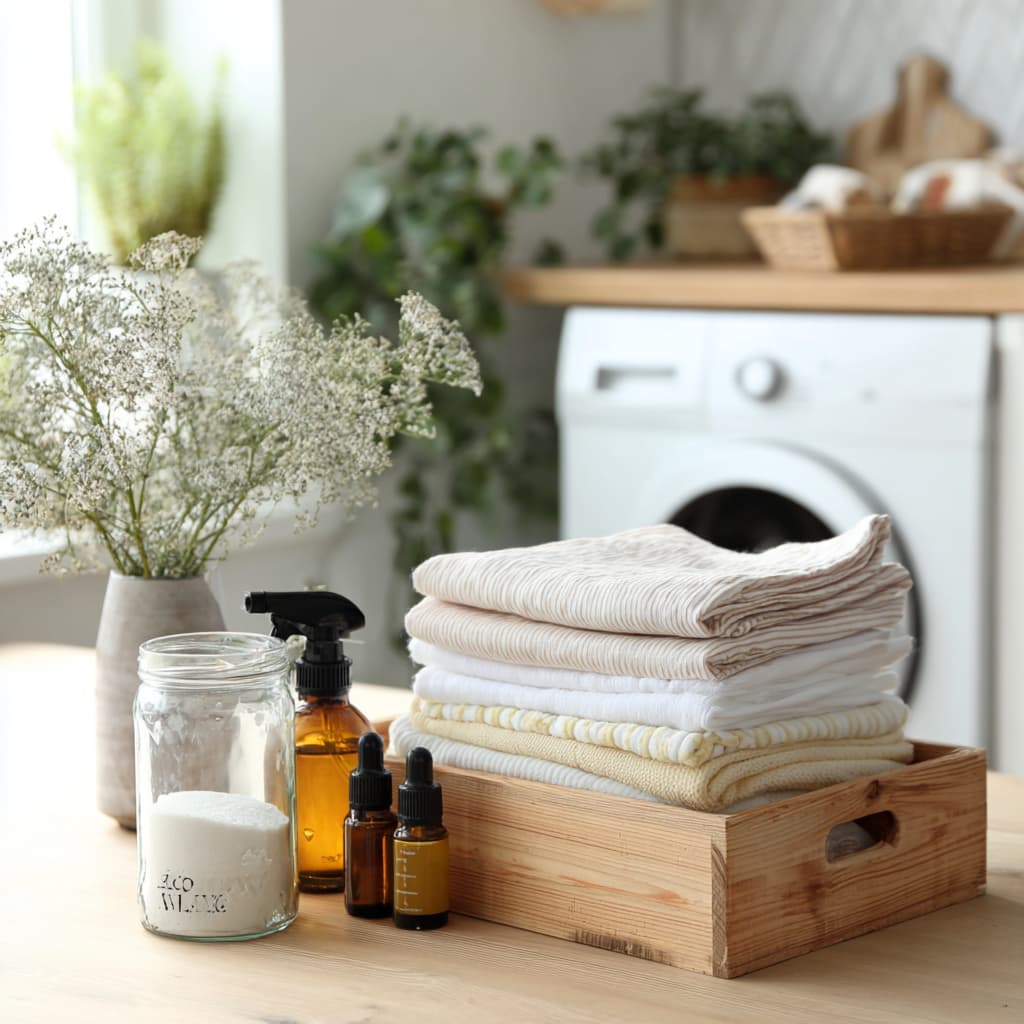

There’s nothing like the smell of freshly washed laundry – but most people don’t realize how many hidden chemicals are behind that “clean” scent. Conventional detergents and fabric softeners often contain synthetic fragrances, dyes, and harsh ingredients that irritate the skin, pollute waterways, and damage delicate fabrics over time.
The good news? You don’t need them. With a few eco-friendly laundry hacks, you can keep your clothes fresh, soft, and spotless – while saving money and reducing your environmental footprint. Here are some of the easiest and most effective natural laundry swaps to try at home.
Many conventional laundry detergents contain ingredients that may irritate skin or persist in waterways. According to the Environmental Working Group (EWG), choosing simpler, eco-friendly laundry products can help reduce chemical exposure and environmental impact.
1. Switch to Natural Laundry Detergents
Many commercial detergents contain sulfates, artificial fragrances, and optical brighteners that can trigger allergies or cause skin irritation. Instead, look for natural laundry detergents made with plant-based surfactants and biodegradable ingredients.
Homemade powder (machine-safe):
- Recipe: 1 cup washing soda (sodium carbonate) + 1 cup baking soda + 1 cup finely grated fragrance-free natural soap (Castile/Marseille). (Optional for whites only: ¼ cup oxygen bleach / sodium percarbonate).
- How much: HE/front-loader – 1-2 tbsp per load; standard top-loader – 2-3 tbsp per load.
- How to use: For cold cycles, dissolve the powder in a cup of warm water first to avoid soap residue.
Is it suitable for a washing machine or only hand-wash?
Suitable for both. Use small amounts in HE machines (low-sudsing). To prevent build-up from the soap flakes, run a monthly hot cycle with 1 cup white vinegar (empty machine) as maintenance.
Is it ok for colors or only whites?
Safe for colors and whites.
- For brights/darks: wash cold, skip the optional oxygen bleach, and test colorfastness if unsure.
- For whites/linens: add the optional oxygen bleach to boost brightness.
- Avoid on silk/wool and very delicate fabrics (use a gentle liquid instead).
Hand-wash option (for delicates):
- Dissolve 1 tsp of the powder in a basin of warm water or use 1-2 tsp liquid Castile soap diluted; rinse well.
Pro tips:
- Hard water? Add an extra 1 tbsp washing soda to the wash.
Eco-friendly routines also support your health. Discover how to Boost Your Immune System Naturally Every Day.
2. Baking Soda as a Laundry Booster
Why it works: Baking soda neutralizes odors, balances pH, and gently whitens without harsh chemicals. It’s especially effective on gym clothes, kitchen towels, or fabrics that trap odors.
How to use:
- Add ½ cup baking soda directly to the drum of the washing machine along with clothes.
- Can also be dissolved in warm water for soaking smelly clothes before washing.
Warnings & limitations:
- Color safety: Generally safe for most fabrics and colors, but avoid overuse on bright/dark clothes – it may cause slight fading over time.
- Delicate fabrics: Not suitable for wool, silk, or cashmere, as it can weaken delicate fibers.
- Hard water: Less effective if your water is very hard – combine with washing soda or vinegar rinse.
- Do not mix directly with vinegar in the same wash step, as they neutralize each other (use vinegar only in the rinse cycle).
Extra tip: For strong odors (like gym wear), sprinkle baking soda inside shoes or bags overnight, then wash the fabric separately.
3. White Vinegar as a Natural Fabric Softener
Why it works:
White vinegar dissolves detergent residues, softens fibers, reduces static cling, and naturally deodorizes clothes. It’s especially helpful if your towels feel stiff or clothes retain detergent build-up.
How to use:
- Add ½ to 1 cup of white vinegar to the fabric softener compartment of your washing machine.
- For hand-washing, add ½ cup vinegar to the rinse water.
Warnings & limitations:
- Fabric type: Avoid on delicate fabrics like silk, rayon, and acetate (vinegar can weaken these fibers).
- Color safety: Generally safe for colors, but test first on bright or deep hues to be sure.
- Smell: The vinegar scent fades as clothes dry, but avoid flavored vinegars (only plain white vinegar).
- Machine care: Vinegar helps remove limescale, but too frequent use in very high amounts may wear out rubber seals in some older washing machines.
Extra tip: For extra freshness, you can add a few drops of essential oil (like lavender or lemon) to the vinegar before pouring it in the softener drawer.
Keep your space toxin-free with DIY Natural Cleaning Sprays.
4. Essential Oils for Freshness
If you love scented laundry, swap synthetic fragrances for pure essential oils.
- Add 5–10 drops of lavender, lemon, or eucalyptus essential oil to a small cloth and toss it in with your laundry.
- Or, apply drops directly onto wool dryer balls (see below).
- Bonus: Lavender oil has natural antibacterial properties, while citrus oils bring an uplifting freshness.
5. Wool Dryer Balls – The Natural Fabric Softener Alternative
Why it works:
Wool dryer balls are an eco-friendly substitute for single-use dryer sheets. They bounce around in the dryer, separating clothes, improving airflow, and cutting drying time by up to 25%. This saves energy and reduces wrinkles.
How to use:
- Add 3-4 wool dryer balls into your dryer with your clothes.
- For larger loads, use 5–6 balls.
- You can add a drop of essential oil (lavender, eucalyptus, orange) to each ball for a light natural scent.
Benefits:
- Softens fabrics without chemicals.
- Helps reduce static cling.
- Reusable for hundreds of loads (eco + budget-friendly).
Warnings:
- May slightly increase lint on certain fabrics (especially new cottons or dark clothes).
- Essential oils should be used sparingly to avoid oil spots — always let them soak into the wool before tossing in the dryer.
Learn how to cut waste in your kitchen with our Zero-Waste Kitchen Guide.
6. Wash in Cold Water
Washing in cold water saves energy and preserves the integrity of your clothes.
- Cold water is gentler on fabrics, keeps colors vibrant, and is just as effective when used with natural detergents.
- It also cuts your energy bill significantly.
7. Air Drying (Line Drying) for Energy Saving & Freshness
Why it works:
Air drying is one of the most eco-friendly laundry practices. It saves electricity, extends the lifespan of clothes, and gives fabrics that fresh “sunshine scent” that no detergent can replicate.
How to do it:
- Hang clothes on a drying rack indoors or on a clothesline outside.
- Place garments in the sun when possible — sunlight naturally disinfects and helps whiten.
- For delicate fabrics, hang in the shade to prevent fading.
Benefits:
- Zero energy consumption.
- Less wear and tear on fabrics compared to machine drying.
- Naturally removes lingering odors.
Warnings:
- Prolonged sun exposure may fade dark-colored clothes.
- Outdoor drying may collect pollen or dust (not ideal for allergy sufferers).
8. Natural Stain Removal Tricks
You don’t need harsh chemical stain removers – nature has plenty of solutions:
- Lemon juice: Natural bleaching agent for whites.
- Hydrogen peroxide: Works for stubborn stains like blood or wine.
- Baking soda paste: Great for grease or sweat stains.
- Salt: Effective on fresh red wine stains.
Eco-friendly laundry isn’t complicated – it’s about making small, sustainable swaps that are healthier for your skin, your clothes, and the planet. Whether you start with vinegar instead of fabric softener, add essential oils for freshness, or switch to cold water washes, every change makes a difference.
Try one of these natural hacks with your next load of laundry and see how fresh, soft, and chemical-free your clothes can feel.
Just like natural laundry care, switching to natural kitchen cleaning and dishwashing solutions helps reduce chemical exposure throughout the entire home.
FAQ
1. Can I use homemade natural detergents in the washing machine?
Yes, most DIY natural detergents are safe for washing machines, but always check the recipe. Powder blends with washing soda and castile soap usually work for both hand and machine washing. For high-efficiency (HE) machines, use smaller amounts to prevent residue.
2. Is baking soda safe for all types of laundry?
Baking soda is generally safe for most fabrics, but avoid frequent use on delicate materials like wool and silk. It works best for cotton, synthetics, and towels.
3. Can vinegar damage my washing machine?
No — white vinegar is safe for most washing machines and helps dissolve detergent buildup. However, don’t use it at the same time as baking soda in the same cycle, as they neutralize each other.
4. How do I prevent colors from fading when line drying?
Dry clothes in the shade or indoors away from direct sunlight. While sunlight naturally disinfects and brightens whites, it can fade dark or vibrant fabrics.
5. Are essential oils safe to add to laundry?
Yes, but always use just a few drops (3–5) diluted in vinegar or baking soda. Never apply essential oils directly onto fabrics, as they can cause staining or skin irritation.