A simple DIY natural cleaner recipe for a healthy, fresh home
If you’ve ever felt dizzy after cleaning or noticed skin irritation from conventional sprays, you’re not alone. Most store-bought cleaners contain harsh chemicals that may affect both your health and the environment. The good news? You can make your own DIY natural cleaner that’s safe, effective, and costs just a fraction of commercial products.
This gentle all-purpose cleaner leaves your home sparkling — without synthetic fragrance, parabens, or toxic fumes.
Many conventional cleaning products contain ingredients that may irritate skin or affect indoor air quality. According to the Environmental Working Group (EWG), choosing simpler, non-toxic formulations can significantly reduce everyday chemical exposure.
The Power of Simple Ingredients
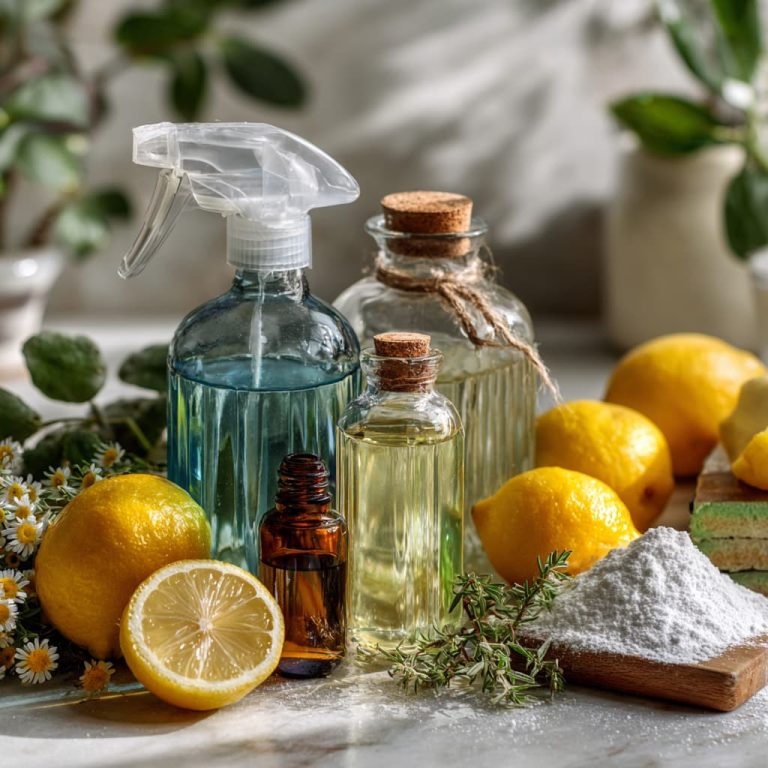
When it comes to natural cleaning, less really is more. A few kitchen staples are all you need to dissolve grease, remove dirt, and leave every surface smelling fresh.
- White vinegar – a natural disinfectant that cuts through grease and soap residue.
- Castile soap – plant-based and biodegradable; lifts away dirt without irritation.
- Essential oils – add a pleasant scent and antibacterial boost (try lemon, tea tree, or lavender).
- Distilled water – prevents bacteria growth and extends the shelf life of your cleaner.
- Baking soda – neutralizes odors and gently scrubs away grime.
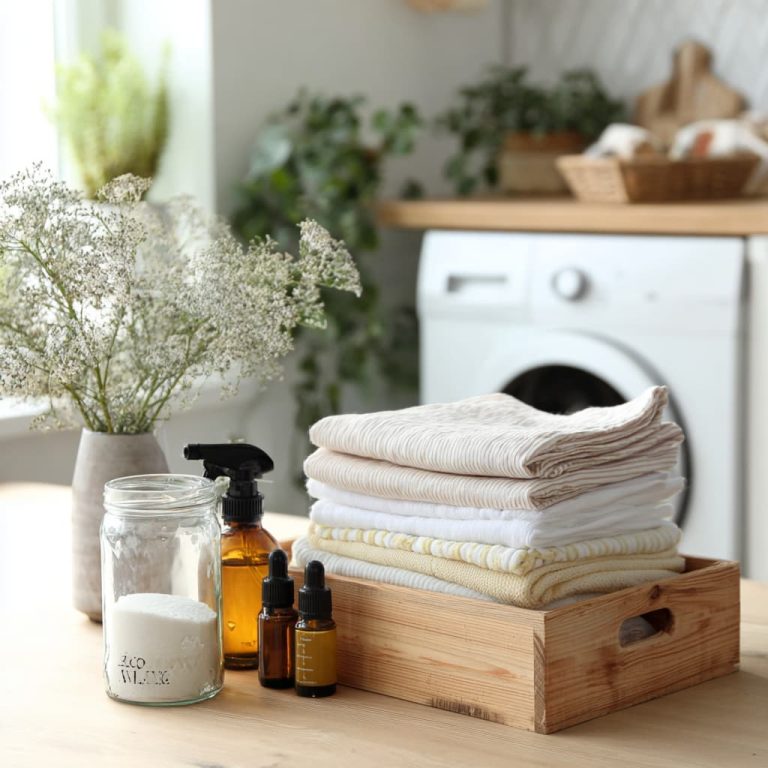
Baking soda works best as a gentle scrub rather than in spray form, so keep a small jar near your sink for tougher cleaning jobs. It’s perfect for sinks, stovetops, and any spot that needs a little extra shine.
Each of these ingredients is safe, sustainable, and proven to work — together they create an all-purpose solution you’ll actually enjoy using.
Basic DIY Natural Cleaner Recipe
Ingredients:
- 1 cup distilled water
- ½ cup white vinegar
- 1 tablespoon liquid Castile soap
- 10–15 drops essential oil (choose one or blend several)
Optional scent blends:
- Citrus Fresh: 10 drops lemon + 5 drops sweet orange
- Herbal Calm: 8 drops lavender + 4 drops eucalyptus + 3 drops rosemary
- Clean Kitchen: 10 drops tea tree + 5 drops peppermint
Directions:
- Add all ingredients to a glass spray bottle.
- Gently swirl to combine (avoid vigorous shaking).
- Label your bottle and store it in a cool, dark place.
Shelf life: about 3–4 weeks.
Tip: make small batches for best freshness.
How to Use This Non-Toxic All-Purpose Cleaner
Spray the cleaner directly onto surfaces and wipe with a microfiber cloth. Works beautifully on:
- Kitchen counters and sinks
- Bathroom tiles and fixtures
- Mirrors and glass
- Door handles, tables, and furniture
Avoid using vinegar-based cleaners on natural stone like marble, granite, or limestone — the acid may dull the surface.
For those, swap vinegar for witch hazel or just use water + Castile soap.
For deeper bathroom care, here’s our detailed guide on removing mold and mildew naturally, using only safe, non-toxic ingredients.
Bonus: Baking Soda Deep-Clean Version
If you need a stronger formula for greasy stovetops, sinks, or bathroom tiles, try this upgraded DIY natural cleaner recipe with baking soda:
Ingredients:
- 1 cup warm water
- ¼ cup white vinegar
- 1 tablespoon Castile soap
- 1 teaspoon baking soda
- 10 drops lemon or tea tree essential oil
Directions:
Add water and vinegar to a bowl first, then slowly mix in baking soda (it will fizz). Stir in Castile soap and essential oils. Use immediately or within one week for best results.
How to use:
Spray or apply directly to the surface, let sit for a few minutes, then wipe with a damp cloth. Excellent for:
- stovetops and ovens
- sinks and bathroom tiles
- greasy kitchen surfaces
- stubborn spots on stainless steel
Simple Variations
You can easily adapt these cleaners for specific needs:
- Streak-free glass spray: Replace Castile soap with 1 teaspoon rubbing alcohol.
- Pet-safe option: Skip essential oils and add a few drops of unscented soap.
Over time, you’ll find your favorite blend — one that turns cleaning into a small act of care rather than a chore.
This cleaner works especially well on kitchen surfaces like counters, appliances, and cabinet doors. If you want a complete routine, see our guide to natural kitchen cleaning where we show how to deep clean your kitchen step by step.
Sustainable Cleaning Habits
Switching to non-toxic cleaners is just the first step toward a more eco-friendly home.
- Refill your glass bottles instead of buying new ones.
- Use washable cloths instead of disposable paper towels.
- Store extra cleaner in small mason jars to avoid plastic.
These tiny changes add up — for your health, your home, and the planet.
For a fully non-toxic kitchen routine, natural dishwashing solutions are just as important as surface cleaners, especially for items that come into direct contact with food.
Making your own DIY natural cleaner recipe is one of the easiest ways to reduce toxins and simplify your cleaning routine.
It’s gentle, effective, and endlessly customizable — proof that nature truly provides everything we need to keep our homes clean and balanced.
For more ideas, explore our guides to Eco-Friendly Laundry Hacks and DIY Natural Cleaning Sprays.
FAQ
- How long does a DIY natural cleaner last?
It usually stays fresh for up to 3–4 weeks if stored in a cool, dark place. For recipes with baking soda, use within one week for best results. - Can natural cleaners disinfect surfaces?
Yes, vinegar and essential oils like tea tree or lemon have natural antibacterial properties. While not as strong as bleach, they’re effective for everyday cleaning. - What surfaces should you avoid using vinegar on?
Avoid using vinegar-based cleaners on marble, granite, or limestone, as the acid can dull natural stone. Use Castile soap and water instead.