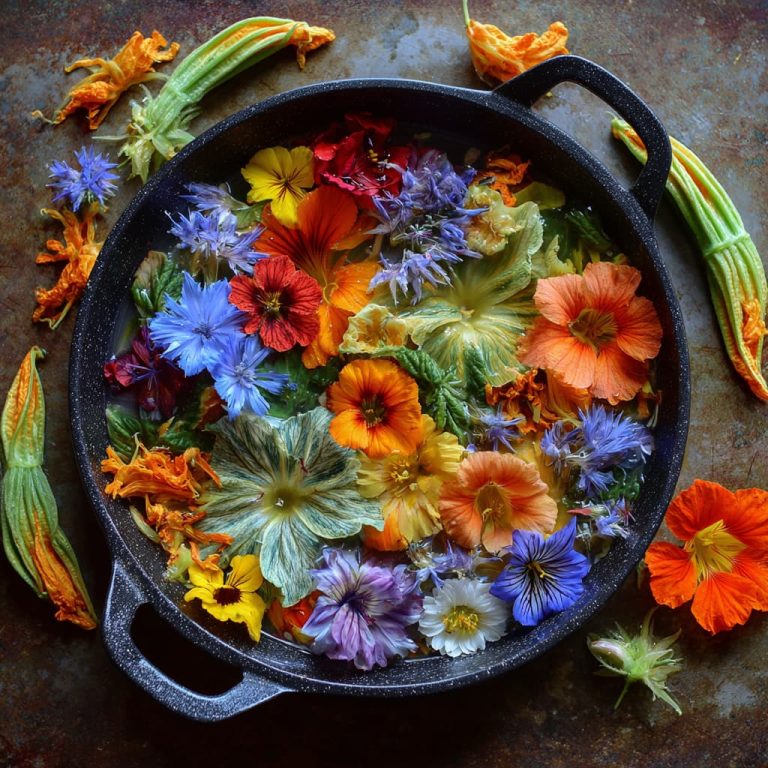

Edible flowers have been used in cooking for centuries. Today, edible flowers recipes are becoming popular again as people rediscover botanical ingredients like rose, lavender, chamomile and violets. From European desserts to herbal drinks and infused sweeteners, flowers add delicate flavor, natural color, and a sense of ritual to everyday food.
If you already grow flowers in your garden or enjoy herbal cooking, these simple edible flowers recipes are an easy way to bring edible blooms into your kitchen. The recipes below are beginner‑friendly, visually beautiful, and perfect for seasonal cooking.
Easy Edible Flowers Recipes to Try at Home
If you are curious about cooking with flowers, these easy edible flowers recipes are a perfect place to start. They use simple ingredients and highlight the natural aroma of botanical ingredients like rose, chamomile and lavender.
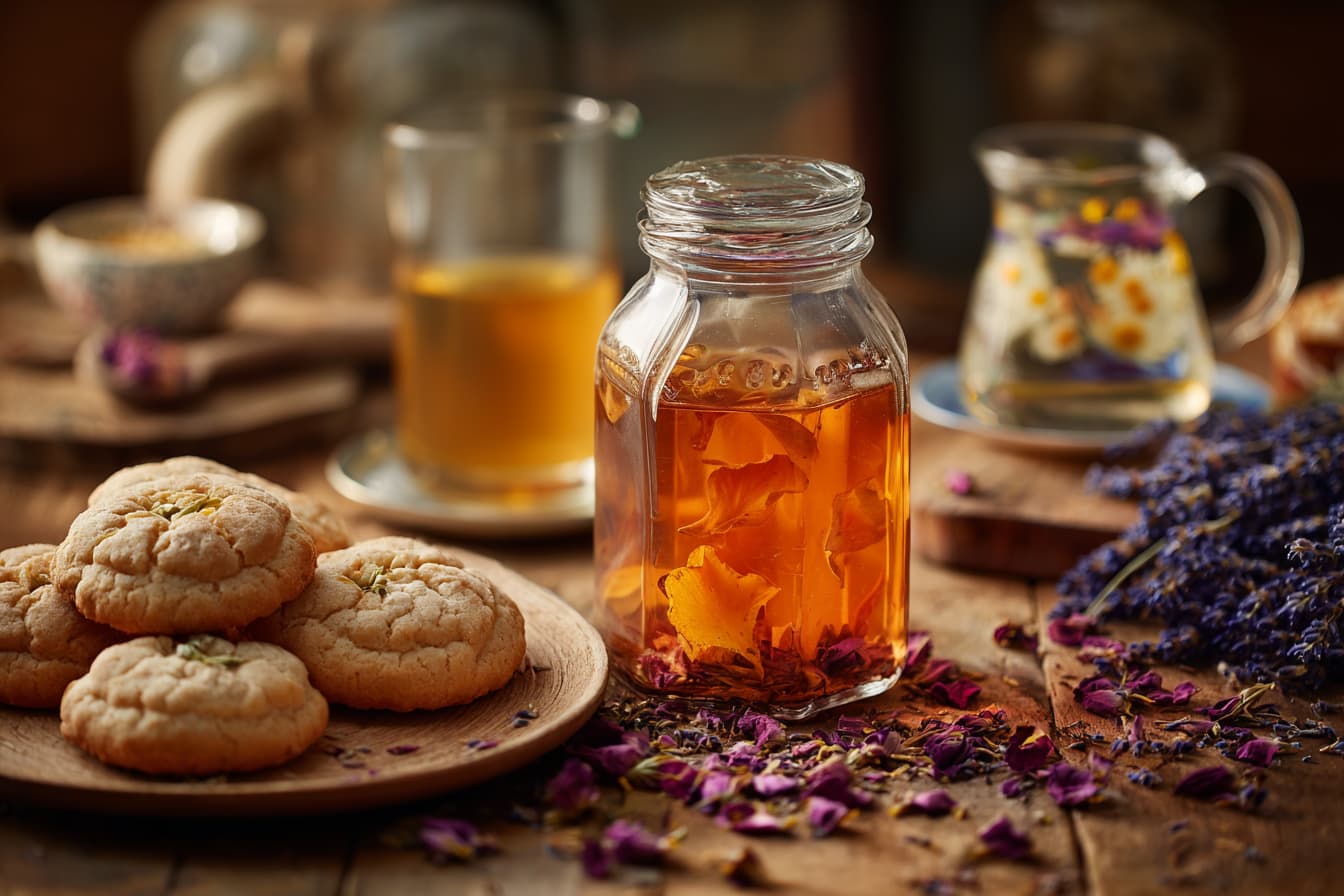
1. Rose Petal Honey
Rose and honey are a timeless pairing. Infusing honey with rose petals creates a fragrant sweetener that works beautifully in tea, yogurt, or desserts.
Ingredients
- 1 cup raw honey
- 1/2 cup fresh organic rose petals
- 1 small glass jar
Instructions
- Gently rinse the rose petals and pat them dry.
- Place the petals into a clean glass jar.
- Pour honey over the petals until completely covered.
- Close the jar and let it infuse for 3–7 days.
How to Use
- Stir into herbal tea
- Drizzle over yogurt or oatmeal
- Add to pancakes or waffles
- Use as a natural throat soother
2. Violet Sugar
Violet sugar is a classic European confection ingredient. It carries a delicate floral aroma and a soft purple tint.
Ingredients
- 1 cup sugar
- 1/2 cup fresh violet flowers
Instructions
- Place sugar and violet flowers in a blender or mortar.
- Pulse lightly until the flowers are finely mixed into the sugar.
- Spread the mixture on parchment paper.
- Allow it to dry for about 24 hours.
How to Use
- Sprinkle on cookies
- Flavor tea or lemonade
- Decorate cakes and pastries
3. Chamomile Lemonade
Chamomile adds a calming herbal note to fresh lemonade, making it perfect for warm afternoons.
Ingredients
- 2 cups hot water
- 2 tbsp fresh chamomile flowers (or 2 tea bags)
- Juice of 2 lemons
- 2–3 tbsp honey
- 2 cups cold water
Instructions
- Steep chamomile in hot water for 10 minutes.
- Strain and allow the infusion to cool.
- Add lemon juice and honey.
- Mix with cold water and serve over ice.
Serving Tip
Add a few whole chamomile flowers and lemon slices for decoration.
4. Candied Edible Flowers
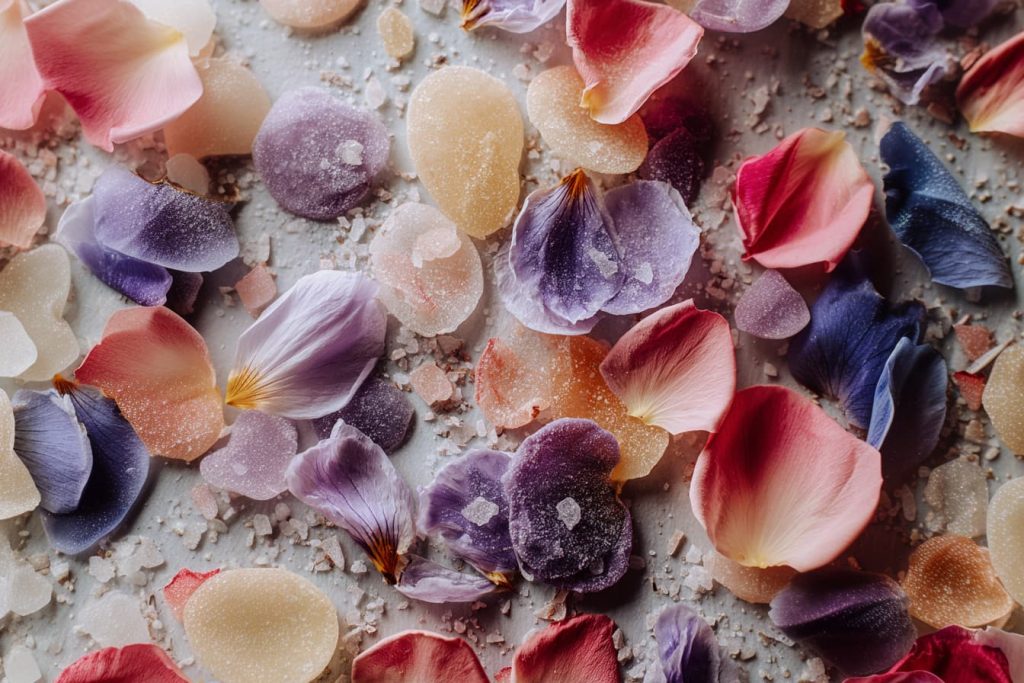
Candied flowers are one of the most elegant ways to use edible blooms. Once dried, they look like tiny crystal decorations and are perfect for desserts.
Ingredients
- Fresh edible flowers (violets, pansies, rose petals, lavender)
- 1 egg white
- Fine sugar
Instructions
- Gently wash and dry the flowers.
- Lightly beat the egg white.
- Using a small brush, coat each flower with a thin layer of egg white.
- Sprinkle with sugar until fully covered.
- Let the flowers dry on parchment paper for 24 hours.
How to Use
- Decorate cakes
- Top cupcakes
- Garnish chocolates
- Add to cookies
5. Lavender Shortbread Cookies
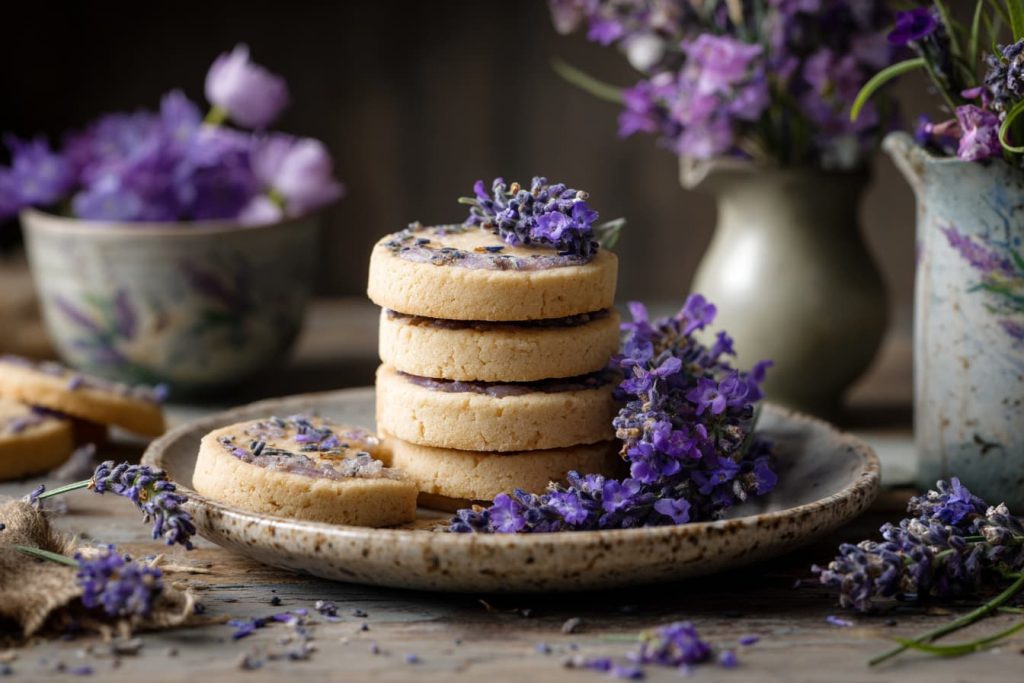
Lavender shortbread cookies are buttery, fragrant, and lightly floral. They pair beautifully with tea.
Ingredients
- 1 cup butter, softened
- 1/2 cup powdered sugar
- 2 cups flour
- 1 tbsp culinary lavender
- Pinch of salt
Instructions
- Cream the butter and powdered sugar until smooth.
- Add flour, lavender, and salt.
- Mix until a soft dough forms.
- Shape into a log and chill for 30 minutes.
- Slice cookies and bake at 170°C (340°F) for 12–15 minutes.
Flavor Variation
A little lemon zest pairs beautifully with lavender.
Are Edible Flowers Safe to Eat?
Yes, many flowers are safe to eat, but it is important to make sure the variety you are using is actually edible. Some flowers are perfectly safe and commonly used in cooking—such as roses, chamomile, lavender, violets, and calendula—while others can be toxic.
If you are new to botanical cooking and exploring edible flowers recipes, always start by identifying the plant correctly and using flowers that are organic and pesticide‑free. Avoid flowers from florists, garden centers, or roadsides, as they are often treated with chemicals.
If you would like to learn more about which flowers are safe to use in the kitchen, you can also read our guide to edible flowers where we explain the most common culinary varieties and how to use them.
Tips for Cooking with Edible Flowers
- Always verify that the flower is edible before using it.
- Avoid flowers from florists or roadside areas.
- Harvest flowers in the morning when they are most fragrant.
- Use petals rather than the bitter green base of many flowers.
Important: When cooking with edible flowers, always use organic, pesticide‑free flowers that are specifically known to be edible.
Before using any flowers in the kitchen, make sure they are safe to eat. You can find a helpful guide to edible flowers from the Royal Horticultural Society.
Common Edible Flowers to Try
If you enjoy cooking with flowers, these varieties are widely used in natural cuisine:
- Rose
- Chamomile
- Lavender
- Violet
- Calendula
- Elderflower
- Hibiscus
- Nasturtium
- Borage
Each flower brings its own flavor profile—from citrusy and honey‑like to lightly herbal.
A Simple Way to Bring Nature Into the Kitchen with Edible Flowers Recipes
If you grow roses, chamomile, or lavender in your garden, these simple edible flowers recipes are a beautiful way to use your harvest. Cooking with edible flowers is about flavor, beauty and ritual. A handful of petals can transform a simple dish into something memorable.
Whether you infuse honey, decorate cakes, or bake floral cookies, these recipes are an easy way to explore the world of botanical cooking.
Flavor Profile of Common Edible Flowers
If you are experimenting with edible flowers recipes, it helps to understand the flavor profile of different flowers. Some are sweet and fragrant, while others are more herbal or slightly spicy.
| Flower | Flavor | Best Uses |
|---|---|---|
| Rose | Sweet, fragrant | Honey infusions, desserts, tea |
| Lavender | Herbal, slightly floral | Cookies, syrups, baking |
| Chamomile | Light, apple-like | Lemonade, tea, infusions |
| Violet | Delicate, lightly sweet | Sugars, candies, cake decoration |
| Calendula | Mild, slightly peppery | Salads, butter, rice dishes |
Understanding these flavors makes it easier to choose the right flowers when preparing edible flowers recipes at home.
FAQ: Cooking with Edible Flowers
What flowers are safe to eat in recipes?
Some of the most commonly used flowers in edible flowers recipes include rose, chamomile, lavender, violet, calendula, nasturtium, borage, and elderflower. Always confirm the plant species before consuming and use only organic, pesticide-free flowers.
Do edible flowers have a strong flavor?
Most edible flowers have a very delicate taste. Roses are lightly sweet and fragrant, lavender is slightly herbal, while chamomile has a gentle apple-like flavor. In many edible flowers recipes, flowers are used more for aroma and visual beauty than strong flavor.
Can you cook with flowers from your garden?
Yes, garden flowers can be used in cooking as long as they have not been treated with pesticides or chemical fertilizers. If you grow culinary flowers yourself, they are perfect for homemade edible flowers recipes like infused honey, floral sugar, teas, and desserts.