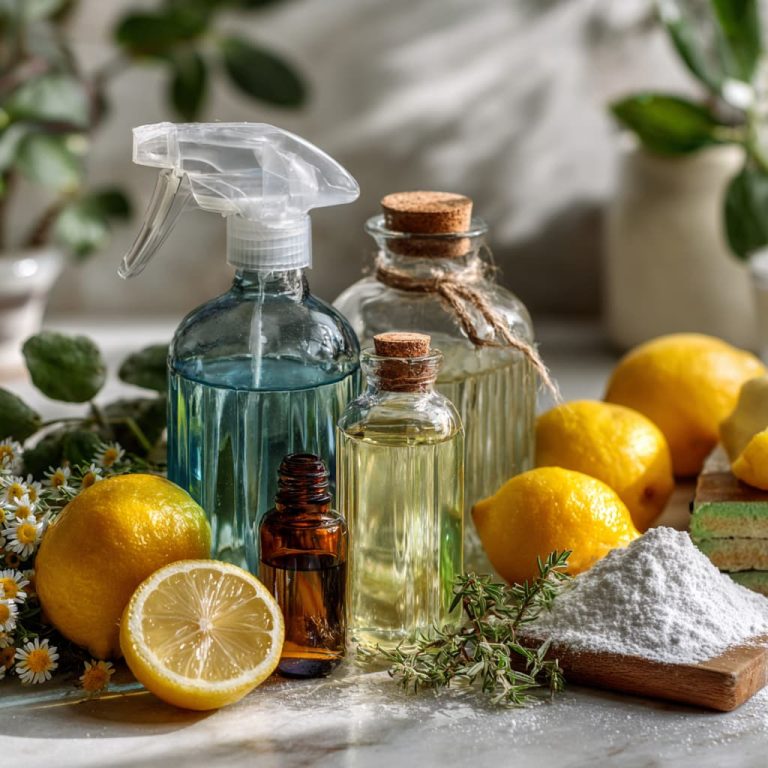

A clean kitchen is one of the foundations of a healthy home. But many conventional cleaners contain harsh chemicals that are not ideal for surfaces where we prepare food every day.
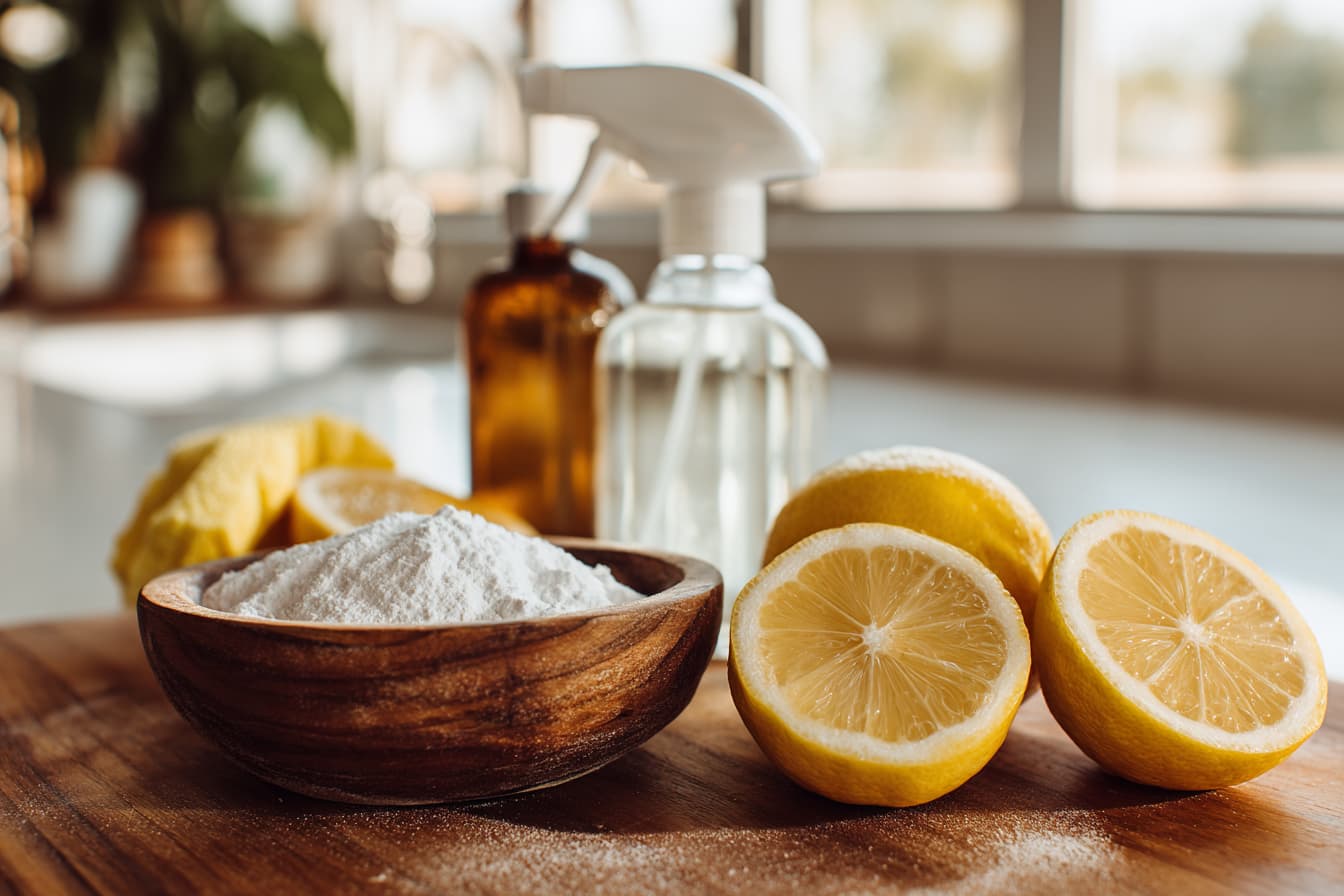
Natural kitchen cleaning offers a safer and often surprisingly effective alternative. With simple ingredients like baking soda, vinegar, lemon, and castile soap, you can remove grease, eliminate odors, and keep your kitchen fresh without relying on synthetic chemicals.
Jump to Section
1. Natural ingredients for kitchen cleaning 2. Quick natural kitchen cleaning checklist 3. Daily, weekly, and monthly cleaning routine 4. Step‑by‑step natural kitchen deep cleaning 5. DIY natural kitchen cleaner recipes 6. Mistakes to avoid
In this guide, you will learn how to deep clean your kitchen naturally using simple methods and DIY cleaners that are easy to make at home.
Natural kitchen cleaning helps reduce exposure to harsh chemicals while keeping food preparation areas fresh and hygienic.
1. Natural Ingredients That Work Best for Kitchen Cleaning
Many of the most effective natural kitchen cleaners are already in your pantry.
Baking Soda
Baking soda is one of the most versatile natural cleaning ingredients. It works as a gentle abrasive that helps remove grease, stains, and food residue without scratching most surfaces.
White Vinegar
White vinegar is excellent for dissolving grease, mineral buildup, and soap residue. It is commonly used in natural kitchen cleaning solutions for countertops, appliances, and sinks.
Lemon
Lemon has natural antibacterial properties and a fresh scent. It is especially useful for deodorizing cutting boards, sinks, and garbage disposals.
Castile Soap
Castile soap is a plant‑based soap that works well for cutting grease on stovetops, countertops, and kitchen appliances.
Hydrogen Peroxide
Hydrogen peroxide can be used as a natural disinfecting agent for certain kitchen surfaces, especially cutting boards.
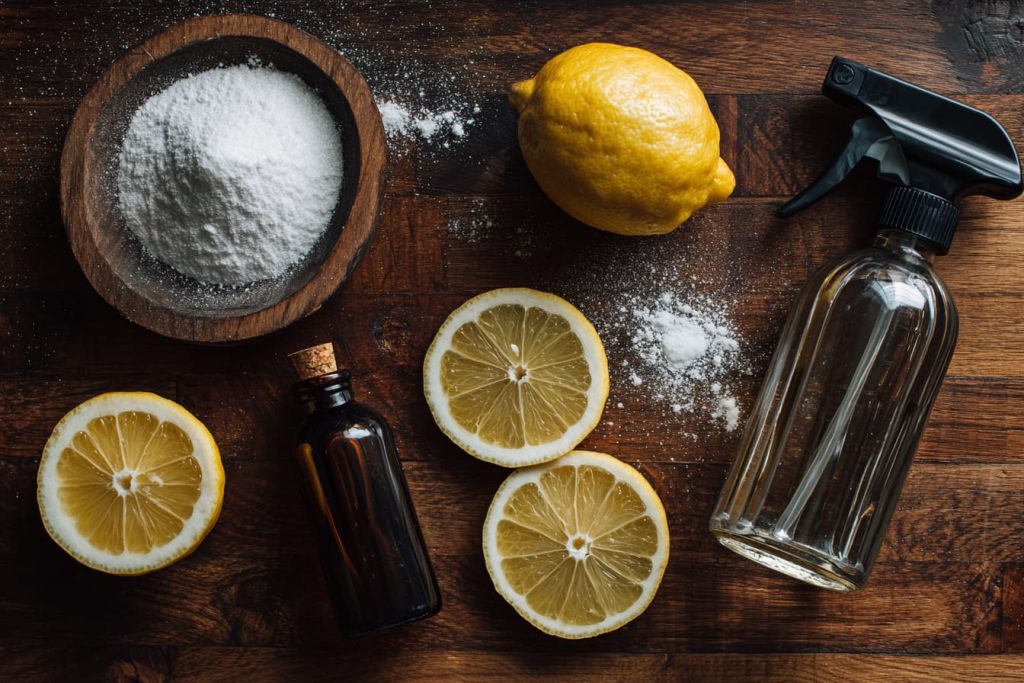
2. Quick Natural Kitchen Cleaning Checklist
This quick checklist makes natural kitchen cleaning simple and manageable.
✔ Degrease with baking soda
✔ Disinfect with vinegar
✔ Freshen with lemon
✔ Clean sink & drain naturally
✔ Wipe surfaces toxin-free
Daily
- Wipe kitchen counters
- Rinse and wipe the sink
- Quick stovetop wipe
- Empty food scraps
Weekly
- Disinfect cutting boards
- Clean fridge shelves
- Degrease stovetop
- Wipe cabinet handles
Monthly
- Deep clean oven
- Clean kitchen cabinets
- Deep clean refrigerator
- Clean small kitchen appliances
3. Daily, Weekly, and Monthly Natural Kitchen Cleaning Routine
Keeping a kitchen clean naturally becomes much easier when tasks are divided into small routines. Instead of doing a full deep clean all the time, a simple daily, weekly, and monthly rhythm helps prevent grease buildup, odors, and hidden grime.
This approach is one of the most effective strategies for consistent natural kitchen cleaning because it keeps surfaces fresh while reducing the need for heavy scrubbing later.
Daily Kitchen Cleaning Tasks
Daily natural kitchen cleaning focuses on preventing grease, crumbs, and bacteria from building up on food preparation surfaces.
Simple daily habits include:
- Wiping kitchen counters with a natural all‑purpose cleaner
- Quickly wiping the stovetop after cooking
- Rinsing and wiping the sink to prevent odors
- Sweeping or vacuuming crumbs from the floor
A quick spray made with vinegar, water, and a few drops of lemon works well as a gentle daily kitchen cleaner.
Weekly Kitchen Cleaning Tasks
Weekly cleaning helps maintain the areas that collect grease and food residue more slowly.
Typical weekly natural kitchen cleaning tasks include:
- Cleaning refrigerator shelves and drawers
- Degreasing the stovetop and backsplash
- Disinfecting cutting boards
- Wiping cabinet handles and appliance handles
- Cleaning the microwave interior
Using baking soda and warm water is an excellent way to remove grease and light stains from many kitchen surfaces.
Monthly Deep Kitchen Cleaning
Some areas of the kitchen accumulate hidden grease and residue over time. These spaces benefit from a deeper clean once a month.
Monthly deep cleaning may include:
- Deep cleaning the oven
- Cleaning kitchen cabinets and doors
- Deep cleaning the refrigerator
- Cleaning small kitchen appliances such as the toaster or coffee maker
Following this simple rhythm keeps natural kitchen cleaning manageable and helps maintain a fresh, healthy kitchen environment without relying on harsh chemical products.
4. Step‑by‑Step: How to Deep Clean Your Kitchen Naturally
This step‑by‑step process helps you deep clean your kitchen naturally using simple ingredients.
Natural Oven Cleaner
Ovens often collect layers of baked-on grease and food residue. Fortunately, one of the most effective natural oven cleaners requires only two simple ingredients.
DIY Natural Oven Cleaner Recipe
Ingredients:
- 1/2 cup baking soda
- 2–3 tablespoons water
Instructions:
- Mix baking soda and water to create a thick paste.
- Spread the paste over the interior surfaces of the oven, avoiding heating elements.
- Let the mixture sit for 8–12 hours (overnight works best).
- Wipe away the paste with a damp cloth.
- Spray remaining residue with vinegar to dissolve any leftover baking soda.
- Wipe clean with a damp cloth.
This method helps break down grease naturally without harsh chemical fumes.
Natural Fridge Cleaner
Refrigerators should be cleaned regularly since they store fresh food. A simple vinegar solution works well for removing residue and odors.
Simple Natural Fridge Cleaner
Ingredients:
- 1 cup warm water
- 1 cup white vinegar
- juice of half a lemon (optional)
Instructions:
- Remove shelves and drawers from the refrigerator.
- Spray the cleaning solution on surfaces.
- Wipe with a soft cloth or sponge.
- Dry surfaces before returning food.
This mixture helps clean surfaces while keeping the refrigerator fresh.
Natural Cutting Board Disinfecting
Cutting boards can hold bacteria from raw foods, so regular disinfecting is important.
Lemon and Salt Method
- Sprinkle coarse salt over the cutting board.
- Cut a lemon in half.
- Rub the lemon over the salt using circular motions.
- Let it sit for 5 minutes.
- Rinse with warm water and dry thoroughly.
Hydrogen peroxide can also be used occasionally for deeper disinfecting.
Sink Deodorizing
Kitchen sinks can develop odors from food particles and grease buildup.
Natural Sink Deodorizing Method
- Sprinkle baking soda over the sink surface and drain.
- Rub gently with a sponge.
- Pour hot water down the drain.
- Add lemon slices or a splash of vinegar to neutralize odors.
This simple method keeps the sink fresh while helping dissolve residue.
Natural Stovetop Cleaner
Stovetops collect grease quickly, especially after frying or sautéing.
Natural Grease-Cutting Spray
Ingredients:
- 1 cup warm water
- 1 tablespoon castile soap
- 1 tablespoon white vinegar
Instructions:
- Spray the mixture on the stovetop.
- Let it sit for 2–3 minutes to loosen grease.
- Wipe with a microfiber cloth or sponge.
This gentle cleaner helps remove grease while being safe for most stovetop surfaces.

If you’re trying to reduce chemicals in your home, natural kitchen cleaning is also a great step toward building a more sustainable kitchen. You can explore more ideas in our guide to a zero-waste kitchen, where we share simple ways to reduce waste and create a more eco-friendly cooking space.
5. 3 Simple DIY Natural Kitchen Cleaner Recipes
Making your own cleaners is one of the easiest ways to support a natural kitchen cleaning routine. These simple recipes use ingredients that are inexpensive, effective, and widely available.
All-Purpose Natural Kitchen Cleaner
This gentle spray works well for countertops, tables, cabinet doors, and many kitchen surfaces.
Ingredients:
- 1 cup water
- 1 cup white vinegar
- 10 drops lemon essential oil (optional)
Instructions:
- Combine all ingredients in a spray bottle.
- Shake gently before use.
- Spray on surfaces and wipe with a cloth.
This cleaner helps dissolve grease and neutralize odors while keeping surfaces fresh.
Natural Grease Remover Spray
For areas that collect heavier grease—such as stovetops or backsplashes—a slightly stronger mixture works well.
Ingredients:
- 1 cup warm water
- 1 tablespoon castile soap
- 1 tablespoon baking soda
Instructions:
- Mix ingredients in a spray bottle.
- Spray directly onto greasy areas.
- Let sit for 2–3 minutes.
- Wipe clean with a sponge or cloth.
This mixture helps break down grease without harsh chemical cleaners.
Natural Kitchen Disinfectant Spray
For food preparation areas, a simple disinfecting spray can be helpful after handling raw foods.
Ingredients:
- 1 cup hydrogen peroxide (3%)
- 1 teaspoon lemon juice
Instructions:
- Pour ingredients into a dark spray bottle.
- Spray lightly on the surface.
- Let sit for 1–2 minutes before wiping clean.
This solution can help disinfect surfaces while supporting a non-toxic kitchen cleaning routine.
If you’d like to make a versatile cleaner that works in many areas of the home, see our full guide on how to make a non-toxic all-purpose cleaner, including simple recipes using natural ingredients.
6. Common Mistakes to Avoid When Cleaning Your Kitchen Naturally
Natural kitchen cleaning is simple, but a few common mistakes can make it less effective. Avoiding these issues will help your DIY cleaners work better and keep your kitchen surfaces safe.
Mixing Certain Ingredients
Some natural ingredients should not be mixed together. For example, vinegar and hydrogen peroxide should not be combined in the same container because they can form irritating compounds. It is best to use them separately when needed.
Using Too Much Water on Wood Surfaces
Wood cutting boards and wooden countertops can absorb moisture. Excess water may cause swelling, cracking, or warping over time. Instead, use a lightly damp cloth and dry the surface thoroughly.
Forgetting High-Touch Areas
Cabinet handles, appliance buttons, and refrigerator handles collect bacteria quickly but are often overlooked. Including these areas in your natural kitchen cleaning routine helps maintain better hygiene.
Not Letting Cleaners Sit Long Enough
Natural cleaners often need a short contact time to break down grease or stains. Allow sprays and pastes to sit for a few minutes before wiping to improve their effectiveness.
Skipping Regular Maintenance
One of the most common mistakes is waiting too long between cleanings. Following a simple daily and weekly routine prevents heavy grease buildup and makes natural kitchen cleaning much easier.
Natural cleaning methods are useful beyond the kitchen. For example, bathrooms often require a slightly different approach. You can read our guide on natural mold and mildew bathroom solutions for safe and effective cleaning methods.
Natural kitchen cleaning does not require complicated products. With a few simple ingredients and a consistent routine, you can keep your kitchen clean, fresh, and safe for everyday cooking.
Many conventional cleaning products contain chemicals that may irritate the skin or lungs. Organizations like the Environmental Working Group recommend choosing simpler, non-toxic alternatives when possible.
FAQ – Natural Kitchen Cleaning
What is the best natural cleaner for kitchen surfaces?
One of the most effective natural kitchen cleaners is a simple mixture of white vinegar and water. It helps dissolve grease and remove residue from countertops, appliances, and many sealed kitchen surfaces.
Can vinegar disinfect kitchen surfaces?
Vinegar has mild antibacterial properties and works well for everyday natural kitchen cleaning. However, for deeper disinfecting after handling raw foods, hydrogen peroxide is often more effective.
How often should you deep clean your kitchen?
Most kitchens benefit from a light cleaning daily, a more thorough cleaning weekly, and a deeper clean once a month. Following a routine helps prevent grease buildup and makes natural kitchen cleaning easier.
What is the best natural way to clean a refrigerator?
A mixture of equal parts warm water and white vinegar works well for cleaning refrigerator shelves and drawers. Adding a little lemon juice can help neutralize odors and leave a fresh scent.
What natural ingredients remove kitchen grease best?
Baking soda, vinegar, and castile soap are among the most effective natural grease removers. These ingredients help break down oil and food residue without harsh chemicals.