For centuries, bone broth has been valued as a nourishing, restorative food across cultures. Long before supplements and wellness trends, slow-simmered bones were used to support digestion, strengthen the body, and aid recovery during times of illness or fatigue.
Today, interest in bone broth benefits is returning as many people rediscover the power of traditional foods in supporting overall gut health and microbiome balance.
Jump to the bone broth recipeRich in minerals, collagen, amino acids, and gelatin, bone broth offers gentle nourishment that the body recognizes and absorbs easily. This makes it especially valuable during periods of stress, digestive imbalance, or physical strain.
Explore our full Natural Remedies library for additional support.
What Is Bone Broth?
Bone broth is made by slowly simmering animal bones for many hours. This long cooking process allows minerals and connective tissue components to be released into the liquid, creating a deeply nourishing broth.
Go to the recipe
Unlike regular stock, bone broth is cooked longer and focuses on extracting:
- collagen and gelatin
- amino acids like glycine and proline
- trace minerals that support tissue health
The result is a rich, savory liquid that solidifies slightly when cooled, a natural sign of its gelatin content.
Homemade bone broth is especially valued because it contains no additives and can be prepared gently, allowing the body to benefit from its full nutritional profile.
Bone Broth Benefits for the Body
The benefits of bone broth extend beyond simple nourishment. Because of its unique composition, it supports several systems in the body at once.
Supports Gut Health
One of the most appreciated bone broth benefits is its gentle support for the digestive system. Traditional cultures have long used broth as a foundational food during recovery, illness, or digestive imbalance — and modern understanding helps explain why.
Bone broth contains gelatin and amino acids that help support the integrity of the gut lining. A healthy intestinal lining plays a key role in digestion, nutrient absorption, and overall immune balance. When digestion feels sensitive or overloaded, bone broth offers nourishment in a form that is easy for the body to process.
Many people find that bone broth for gut health feels grounding rather than stimulating. It does not force digestion; instead, it supports it quietly, making it suitable during periods of stress, fatigue, or digestive discomfort.
Alongside bone broth, foods like sea buckthorn that support the gut lining can further nourish the digestive system and intestinal barrier.
Why Bone Broth Is Easy on Digestion
- It is liquid and warm, which helps stimulate gentle digestive activity
- Gelatin supports the natural mucus layer of the gut
- Amino acids like glycine help calm the nervous system, which is closely linked to digestion
Because of this, bone broth is often included in gentle eating routines and gut-supportive diets.
Bone broth pairs beautifully with small servings of fermented foods that nourish the microbiome.
Bone Broth Benefits for Joints and Mobility
Another reason bone broth has remained relevant for generations is its connection to joint and connective tissue health.
As bones and connective tissue simmer slowly, collagen breaks down into gelatin, releasing amino acids such as proline and glycine. These compounds play a role in maintaining the structure of joints, tendons, and ligaments.
For people experiencing joint stiffness, physical strain, or recovery after activity, bone broth offers traditional nourishment that supports movement from within. While it is not a quick fix, regular inclusion of bone broth may help support long-term joint comfort and flexibility.
How Bone Broth Supports Overall Health and Vitality
Beyond gut and joint support, bone broth contributes to overall balance in subtle but meaningful ways.
- Mineral support: The slow cooking process releases trace minerals that support hydration and cellular function.
- Nervous system nourishment: Glycine has a calming effect, which may support relaxation and better sleep.
- Immune resilience: Because gut health and immunity are closely linked, supporting digestion also supports immune balance.
These combined effects help explain why bone broth is often described as restorative rather than energizing — it helps the body recover, not push.
How to Make Bone Broth at Home

Ingredients
- 1–1.5 kg bones (beef, chicken, or lamb; preferably pasture-raised)
- 2 liters filtered water
- 1–2 tablespoons apple cider vinegar
- Optional: onion, carrot, celery, bay leaf, peppercorns
(The vinegar helps draw minerals and collagen from the bones.)
Instructions
- Place the bones in a large pot or slow cooker.
- Add water until the bones are fully covered.
- Add apple cider vinegar and let rest for 20–30 minutes before heating.
- Bring to a gentle boil, then reduce to a low simmer.
- Skim off any foam that rises to the surface.
- Simmer gently:
- Chicken bones: 12–24 hours
- Beef or lamb bones: 24–48 hours
- Strain the broth and discard solids.
The finished broth should be rich and flavorful and may gel slightly once cooled — a natural sign of gelatin content.
Optional: Roasting the Bones First
Some people prefer to roast the bones before simmering, especially for beef bone broth. Roasting enhances flavor but is optional. For a lighter, more gentle broth, the bones can be used raw.
Storage Tips
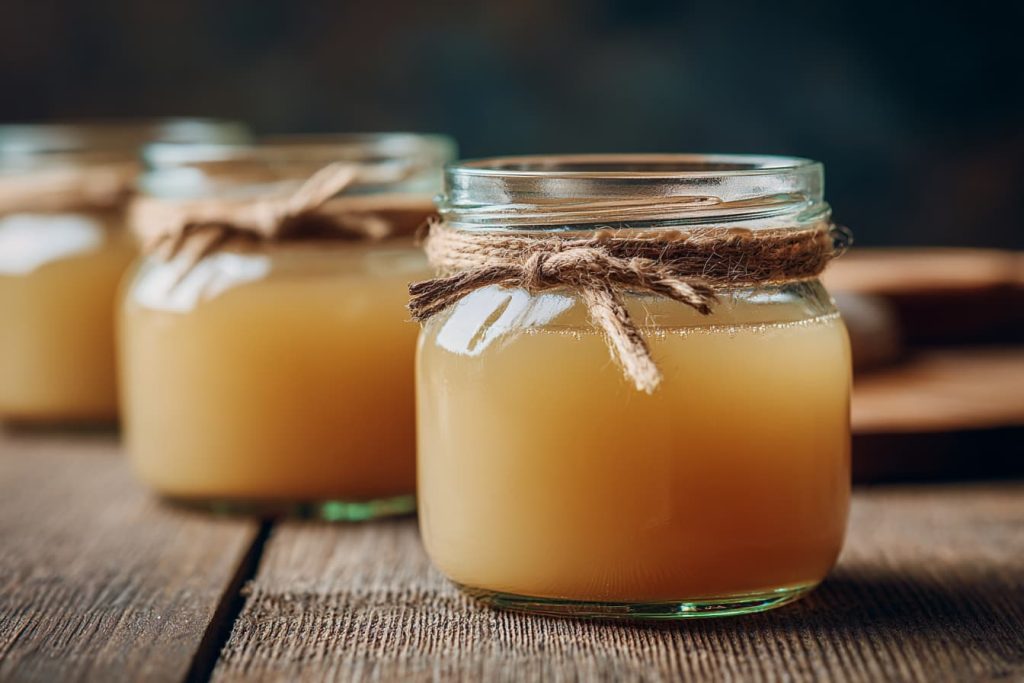
Once cooled, store bone broth in glass jars in the refrigerator for up to 5 days, or freeze in portions for longer storage.
How to Use Bone Broth Daily
Bone broth doesn’t need to be reserved for special occasions or long cooking days. Its simplicity is part of what makes it so valuable, it can fit naturally into everyday routines, especially during times when the body needs gentle support.
Drink It Warm
One of the most traditional ways to enjoy bone broth is simply as a warm drink. Sipped slowly, it can feel grounding and nourishing, especially:
- in the morning instead of coffee
- between meals
- during colder months
- when digestion feels sensitive
Many people find that a small cup of warm bone broth helps them feel more centered and calm.
Use It as a Cooking Base
Bone broth can easily replace water or stock in:
- soups and stews
- grains like rice or quinoa
- vegetables and legumes
This is an effortless way to add nourishment to everyday meals without changing eating habits dramatically.
During Stress or Recovery
Because bone broth is easy to digest and rich in minerals, it is often used during:
- periods of emotional or physical stress
- recovery from illness
- digestive discomfort
- times of low appetite
In these moments, bone broth offers nourishment without overwhelming the body.
Warm bone broth can be especially soothing during cold season, helping ease throat discomfort and support recovery. For additional herbal support, explore these natural remedies for sore throat and cough relief to complement your routine.
When Bone Broth May Not Be Ideal
While bone broth benefits many people, it’s important to approach it with balance and awareness.
Some individuals may notice sensitivity if:
- they are sensitive to histamines
- they consume very concentrated broth in large amounts
- the broth is cooked for extremely long periods
Starting with small amounts and observing how the body responds is always the best approach. Wellness is not about forcing “healthy” foods, but about listening and adjusting.
A Traditional Food for Modern Wellness
Bone broth remains relevant because it bridges nourishment and simplicity. Its value lies not in trends or promises, but in its quiet ability to support the body through gentle, consistent nourishment.
Whether used for gut health, joint comfort, or overall balance, bone broth offers a reminder that some of the most effective wellness practices are also the most traditional.
For a science-based look at collagen and how the body uses it, Harvard’s Nutrition Source offers a helpful overview.