
Flowers Beyond Decoration
Flowers have always been more than decoration. Long before they appeared on plates as trends or visual accents, they were part of everyday life, gathered, infused, brewed, and used with care.
Across cultures, flowers found their place in teas, seasonal foods, and traditional preparations. Some were valued for their gentle flavor, others for their aroma, and many simply because they bloomed when little else was available.
Today, interest in edible flowers is growing again, but so is confusion. Not every flower is safe to eat, and not every edible flower is meant for everyday use. Understanding the difference is essential.
This guide explores familiar, forgotten, and unexpected edible flowers, offering a thoughtful overview of which blooms have traditionally been used, how they were approached, and which ones should be avoided altogether.
If you’re looking for simple and beautiful ways to use edible flowers in your kitchen, you might love these 5 easy recipes to get started.
What Are Edible Flowers, and What They Are Not
The term edible flowers is often used loosely, but it does not mean that every flower in the garden belongs in the kitchen.
Edible flowers are those that have a documented history of safe use in food or traditional preparations. They are consumed in moderation, with attention to the specific part of the plant, the correct species, and the method of preparation.
It is equally important to understand what edible flowers are not:
- They are not decorative flowers treated with pesticides.
- They are not ornamental plants assumed to be safe based on appearance.
- They are not novelty ingredients meant for experimentation without knowledge.
In many traditions, flowers were used sparingly, as infusions, garnishes, or seasonal additions, rather than as main ingredients. This careful approach remains just as relevant today.
Familiar Edible Flowers
Some edible flowers are already well known and widely accepted. Their familiarity offers a sense of safety and continuity, forming the foundation for exploring lesser-known blossoms.
These flowers have been used consistently across cultures and generations, making them a natural starting point.
Rose (Petals Only)
Rose petals have been used in teas, syrups, and preserves for centuries. Their flavor is mild and floral, and their use is deeply rooted in both culinary and cultural traditions.
Calendula
Often called “poor man’s saffron,” calendula petals add gentle color and mild flavor. Traditionally used in teas and simple dishes, calendula bridges food and herbal traditions.
Chamomile
Best known as a calming tea, chamomile flowers have long been valued for their gentle nature. Their use extends beyond beverages into traditional infusions and seasonal blends.
Hibiscus
Hibiscus flowers are widely used in teas and drinks around the world. Their tart flavor and deep color make them one of the most recognizable edible flowers globally.
Elderflower
Elderflower has a long tradition in syrups, teas, and fermented drinks. Light, fragrant, and seasonal, it represents a careful, time-sensitive approach to using flowers as food.
Lavender (Used Sparingly)
Lavender is valued more for its aroma than for flavor. When used in very small amounts, it can add depth to teas and infusions, but moderation is essential.
With these familiar flowers as a foundation, it becomes easier to explore blossoms that once played a quiet role in everyday life, flowers that are edible, but no longer commonly used.
Many edible flowers have traditionally been used not only as food but also in herbal infusions that support digestion and overall gut comfort. You can explore this connection further in
Herbal Teas for Digestion.
Forgotten & Underused Edible Flowers
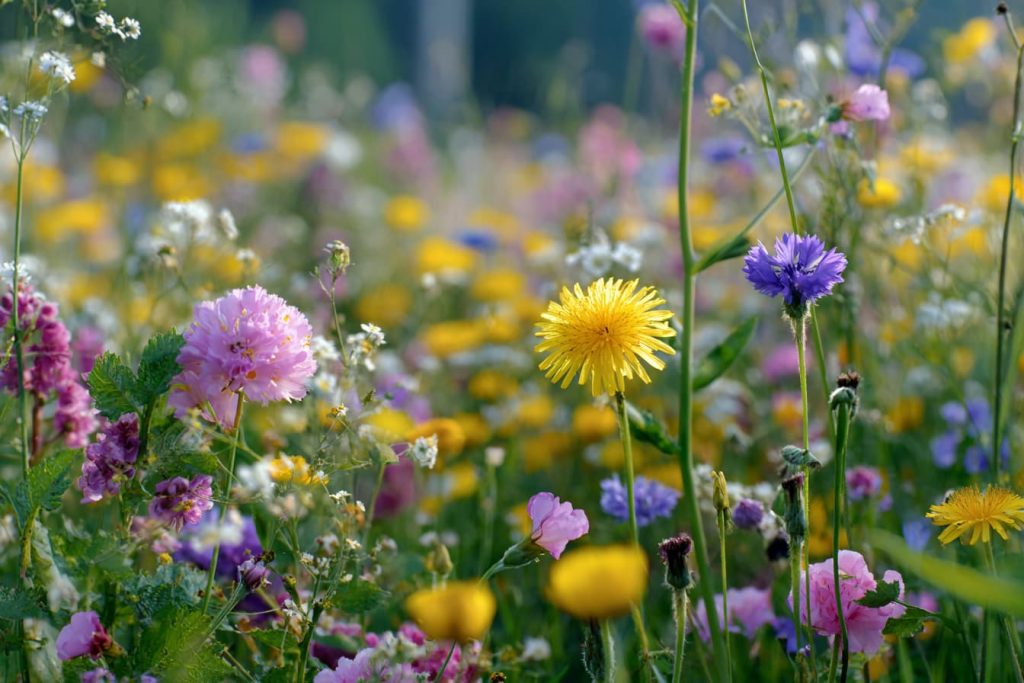
Not all edible flowers are rare or exotic.
Some of the most interesting and useful ones grow quietly in gardens, meadows, and vegetable patches, familiar, yet often overlooked as food.
These flowers were once part of everyday cooking and seasonal living, especially in Europe, but have slowly faded from modern kitchens.
Dandelion (Taraxacum officinale) – More Than a Weed
Dandelion flowers are one of the most accessible edible blossoms. Traditionally used in syrups, infusions, and even homemade “flower honey,” they have a mild, slightly sweet flavor when freshly opened.
The flowers were often gathered in spring, when they were at their most tender, and used sparingly as part of seasonal preparations rather than everyday food.
Note: Only freshly opened flowers should be used, and only from clean, untreated areas.
Clover (Trifolium spp.) – A Meadow Flower with a Gentle Taste
Clover blossoms have long been used in teas and simple infusions. Their flavor is mild and subtly sweet, making them suitable for gentle blends rather than strong preparations.
Historically, clover flowers were valued during times when other food sources were scarce, and today they remain a quiet reminder of how closely food and landscape were once connected.
Chicory (Cichorium intybus) – A Bitter Beauty
Known mostly for its roots and leaves, chicory also produces delicate blue flowers that are edible. The taste is mild, with a slightly bitter edge, reflecting the character of the plant itself.
Chicory flowers were traditionally added to salads or used as a decorative, edible element rather than a main ingredient.
Mallow / Hollyhock (Malva & Alcea species) – Soft, Gentle & Traditional
Mallow and hollyhock flowers have a long history of use in both food and herbal traditions. Their petals are soft, almost silky, and lend themselves well to teas, light infusions, and gentle preparations.
They were often valued not for strong flavor, but for their soothing, calming qualities and visual beauty.
Violet & Viola – Small, Familiar, and Surprisingly Useful
Violets and violas have been used for centuries in European kitchens, especially in spring. Lightly sweet and aromatic, they were traditionally candied, infused into syrups, or added to simple desserts.
Their popularity in the past contrasts with how rarely they are used today, despite being one of the safest and most recognizable edible flowers.
Nasturtium – Bright, Peppery, and Full of Character
Nasturtium is one of the most widely used edible flowers, yet it is often treated as a novelty rather than a real ingredient.
Its flowers have a distinct, slightly peppery taste, similar to watercress or arugula, making them a natural addition to salads and savory dishes. Both the flowers and leaves are traditionally eaten, adding color and flavor without complexity.
Nasturtium bridges the gap between ornamental garden plant and everyday food — a reminder that beauty and usefulness can easily coexist.
Zucchini Blossoms – A Classic That Deserves Recognition
Zucchini flowers are among the most celebrated edible blossoms in traditional cuisines, especially in Southern Europe.
The blossoms are delicate, mild in flavor, and typically used fresh. Historically, they were valued as a way to make use of the plant before the fruit fully developed, reflecting a no-waste, seasonal approach to cooking.
While often associated with specific recipes, zucchini flowers are best understood as a seasonal ingredient — fleeting, gentle, and deeply connected to the rhythm of the garden.
Carnation (Dianthus) – Aromatic, with a Caveat
Carnation petals are edible and have been used for centuries, particularly in European traditions. Their aroma is pleasant and slightly spicy, but an important detail is often overlooked: the bitter white base of each petal should be removed before use.
When prepared correctly, carnation petals can be used to flavor sugars, syrups, or light infusions.
These flowers remind us that edible plants were once part of daily life — not trends or exotic curiosities, but quiet companions shaped by seasons, necessity, and local knowledge.
Beyond culinary use, several edible flowers have a long history in folk remedies, where they were infused into oils and balms for soothing and pain relief. Learn more in
DIY Herbal Balms and Oils for Pain Relief.
Less Common & Unexpected Edible Flowers
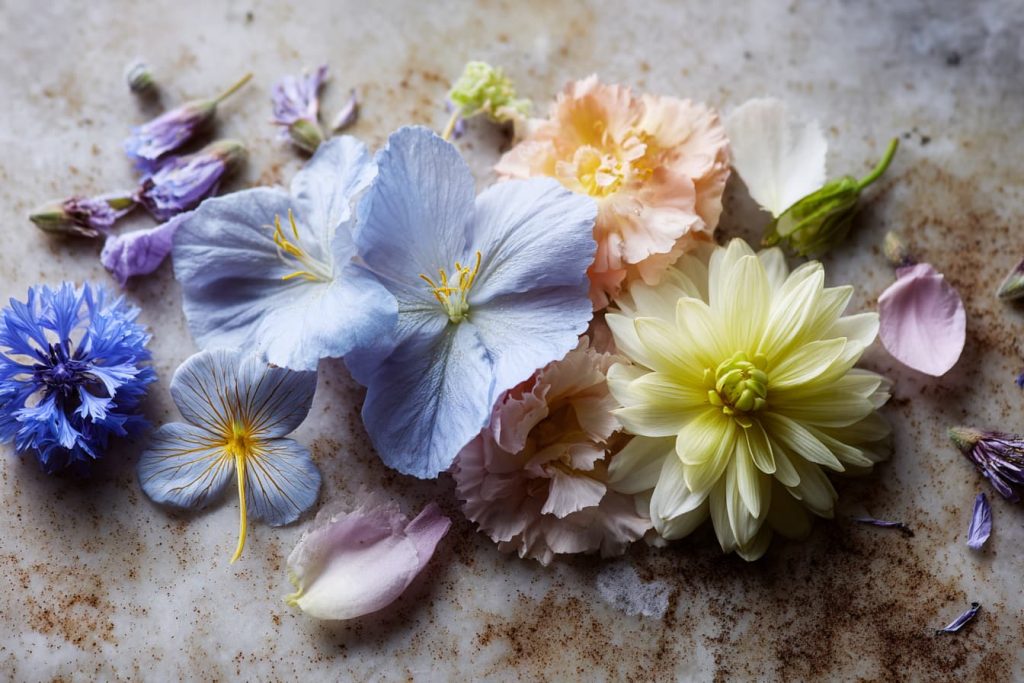
Beyond familiar and forgotten flowers lies a quieter category, blossoms that are traditionally edible, but rarely discussed today. Some are rooted in regional cuisines, others appear in ethnobotanical records, and many surprise simply because they challenge our modern assumptions about what belongs on the plate.
This section invites curiosity, but also respect. These flowers were never everyday foods, they were seasonal, contextual, and used with knowledge.
Borage (Borago officinalis) – Fresh, Light, and Almost Forgotten
Borage flowers are instantly recognizable by their star-shaped blue petals. Their flavor is subtle and refreshing, often described as lightly cucumber-like.
Traditionally, borage flowers were used fresh, added to drinks, salads, or simple preparations, not for intensity, but for freshness and visual appeal. Today, they remain one of the most beautiful and approachable examples of an underused edible flower.
Daylily (Hemerocallis) – Not a Lily, and That Matters
Despite the name, daylilies are not true lilies — an important distinction, since many lilies are toxic.
In traditional Asian cuisines, the unopened flower buds of specific daylily species are used, valued for their mild, vegetal flavor that can resemble asparagus or green beans. The fully opened flowers are typically avoided.
This careful selection highlights a key principle of edible flowers: species and preparation matter.
Chrysanthemum (Edible Varieties Only) – A Cultural Staple Elsewhere
In many East Asian traditions, chrysanthemum flowers are used in teas, broths, and seasonal dishes. The flavor ranges from mildly bitter to herbal, depending on the variety.
It is essential to note that only specific edible cultivars are used. Ornamental chrysanthemums grown for gardens or floristry are not suitable for consumption.
Chrysanthemum is a perfect example of how cultural context shapes what we consider food.
Yucca Flower – A Seasonal Food from Arid Landscapes
Yucca flowers have a long history of use in parts of Mexico and the American Southwest. The petals are harvested when fresh and often cooked lightly to soften their naturally bitter notes.
This flower reflects a deep connection between food and environment, a reminder that edible plants often emerge from necessity and local knowledge, not abundance.
Safflower – Often Confused, Rarely Recognized
Safflower petals have been used historically as a natural coloring agent and mild flavoring. Often mistaken for saffron, safflower offers color rather than intensity.
Its use is subtle and largely forgotten today, but it remains an intriguing example of how flowers once contributed to food long before synthetic dyes existed.
Sunflower Petals – Familiar Plant, Unexpected Use
While sunflower seeds are widely known, the petals themselves are less commonly discussed as edible.
Young sunflower petals can be eaten fresh or lightly steamed. Some traditional references compare their texture, when prepared gently, to the tender heart of an artichoke — a surprising association that transforms how we see this familiar plant.
These blossoms remind us that food traditions are shaped by geography, season, and necessity. Their rarity in modern kitchens does not reflect danger, but rather a shift away from intimate plant knowledge.
Aromatic Blossoms Used with Care
Some flowers are valued less for flavor and more for their aroma. Their role in food traditions is subtle — often appearing in infusions, teas, or lightly scented preparations rather than as ingredients meant to be eaten in quantity.
These blossoms invite a slower approach, where scent, atmosphere, and experience matter more than taste alone.
Citrus Blossoms (Orange, Lemon, Lime, Kumquat)
Citrus flowers have been used traditionally to scent teas, syrups, and desserts, particularly in Mediterranean and Middle Eastern cultures.
Their aroma is fresh and uplifting, while their flavor remains delicate. Citrus blossoms are best used sparingly, often infused briefly rather than consumed directly. Only flowers from untreated trees should ever be considered.
Jasmine (Specific Species Only)
Jasmine is most commonly encountered through jasmine tea, where the flowers are used to scent the leaves rather than become part of the drink itself.
Only certain species, such as Jasminum sambac, are traditionally used in food and beverages. Other plants commonly referred to as “jasmine” may not be suitable for consumption at all.
Here, clarity and correct identification are essential.
Lilac – A Spring Aroma with an Acquired Taste
Lilac flowers have a long history of use in syrups and infusions, particularly in springtime traditions. Their scent is intense, while the flavor can be unexpectedly sharp or bitter.
For this reason, lilac is best approached as an aromatic accent rather than a culinary ingredient, appreciated for its seasonal presence rather than versatility.
Aromatic blossoms remind us that not all edible flowers are meant to nourish the body directly. Some are meant to nourish the senses.
Flowers have always played a role in sensory rituals, not only through taste but also through aroma and atmosphere. If you enjoy botanical rituals at home, you may also like
How to Make Homemade Candles with Essential Oils.
Flowers That Are Not Edible or Not Recommended
One of the most important aspects of working with edible flowers is knowing when not to use them.
Many flowers admired for their beauty are toxic or unsuitable for consumption, despite appearing frequently in gardens and floral arrangements.
This distinction protects not only physical health, but also the integrity of traditional plant knowledge.
Tuberose (Polianthes tuberosa)
Tuberose is prized for its intoxicating fragrance and symbolic richness, especially in perfumery. Despite occasional references to culinary use, tuberose is not recommended for home consumption.
Its inclusion in discussions of edible flowers often reflects confusion rather than tradition.
Gladiolus
Gladiolus is sometimes mentioned in lists of edible flowers, yet it lacks a reliable history of safe culinary use. For this reason, it is best admired solely for its ornamental beauty.
Daffodil, Foxglove, Oleander
These flowers are well-known garden favorites — and unequivocally toxic. No part of these plants should be consumed.
A crucial reminder about lilies
Not all lilies are edible. While daylilies belong to a separate genus, many true lilies are toxic and should never be used as food.
Clear boundaries are as important as curiosity. Responsible use of plants begins with knowing where to stop.
Simple Safety Guidelines for Using Edible Flowers
Before using any flower as food or infusion, a few principles should always be followed:
- Correct species identification is essential
- Use only flowers grown without pesticides or chemical treatments
- Consume in moderation
- Introduce new flowers slowly, especially for sensitive individuals
- Extra caution is advised for children and during pregnancy
Traditional use does not mean unlimited use — it means informed use.
Edible flowers safety guidelines.
Flowers as Seasonal Companions
Edible flowers invite us to reconnect with a slower rhythm of living — one shaped by seasons, observation, and respect.
They are not trends or novelties, but quiet companions that remind us how closely food, landscape, and tradition were once intertwined.
Approached with care and curiosity, edible flowers can gently expand the way we experience plants — not only as decoration, but as part of everyday life.
FAQ – Edible Flowers
Are all flowers edible?
No. Many flowers are toxic or cause allergic reactions. Only flowers that are clearly identified as edible and grown without pesticides should be consumed.
How can I be sure a flower is safe to eat?
Always confirm the plant’s identity using reliable botanical sources or Latin names. Never eat flowers from florists, roadsides, or garden centers unless they are specifically labeled as edible.
Which parts of edible flowers can be eaten?
In most cases, only the petals are edible. Stamens, pistils, and green bases can be bitter or irritating and are best removed unless otherwise stated.
Do edible flowers have health benefits?
Many edible flowers contain antioxidants, flavonoids, and aromatic compounds. Traditionally, some have been used to support digestion, relaxation, or overall vitality.
How should edible flowers be prepared before use?
Gently rinse them in cold water, pat dry, and use them fresh. Some flowers are best lightly cooked, infused, or used as garnishes rather than eaten raw.
Can edible flowers be cooked?
Yes. Flowers such as zucchini blossoms, chrysanthemum, and sunflower petals are commonly sautéed, steamed, or added to soups and teas.
Are edible flowers safe for children and pregnant women?
Small amounts are generally safe, but sensitive groups should consult a healthcare professional, especially when using flowers medicinally or regularly.
Can edible flowers cause allergies?
Yes. People sensitive to pollen or certain plants should try small amounts first or avoid consumption altogether.