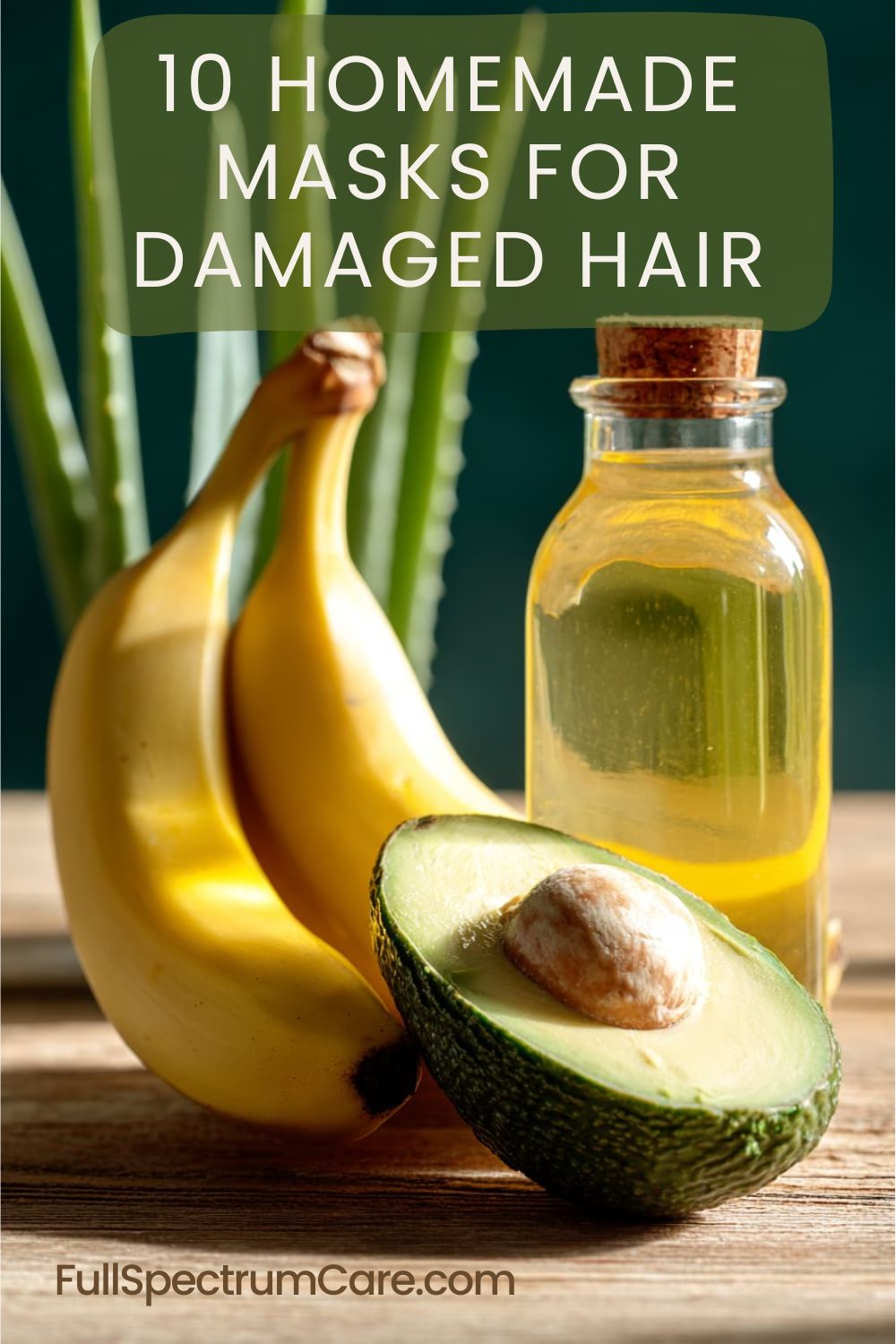
Damaged hair can feel dry, brittle, and lifeless, especially after heat styling, coloring, or environmental stress. The good news is that you don’t need expensive salon products to restore strength and shine.
Many nourishing ingredients, like aloe, oils, honey, bananas, avocado, can work together to restore moisture, repair damage and protect the hair from further breakage.
These 10 homemade masks for damaged hair use simple, natural ingredients to deeply nourish, repair, and protect your hair from further breakage. From rich conditioning masks to herbal and oil-based treatments, each recipe is easy to make at home and suitable for different hair types.
If your hair needs moisture, softness, and long-lasting care, these deep natural hair treatments can help bring it back to life, gently and effectively.
Why Homemade Masks for damaged hair Work
Natural, plant-based ingredients contain bioactive compounds that actively support hair fiber strength and scalp health. Their effectiveness is based on well-studied properties:
Essential fatty acids (omega-3, 6, 9)
These fatty acids:
- smooth the hair shaft and reduce breakage;
- create a protective lipid film;
- improve elasticity in dry or damaged hair.
Oils such as coconut, olive, jojoba and wheat germ are rich, natural sources of these beneficial lipids.
Proteins & amino acids
Ingredients like egg yolk, aloe, wheat and banana contain amino acids that help:
- fill micro-cracks in the cuticle layer;
- temporarily reinforce weakened areas;
- make the hair stronger, smoother and more resilient.
Enzymes, polyphenols & antioxidants
Green tea, aloe and honey are packed with protective antioxidants that:
- reduce oxidative stress on the hair follicle;
- support a healthier scalp environment;
- enhance natural shine and vitality.
Vitamins A, E and B-complex
These vitamins:
- deeply nourish and hydrate dry hair;
- improve damaged hair elasticity;
- protect the hair fiber from UV and environmental damage;
- soothe a dry or irritated scalp.
Science-backed reference
Dermatology research consistently shows that natural lipids and antioxidants found in plant oils and extracts can reduce hair damage and improve cuticle integrity.
A widely cited study published in the International Journal of Trichology explains how coconut oil and similar natural oils penetrate the hair shaft and reduce protein loss.
When these ingredients are used regularly, they help:
– keep the scalp balanced and hydrated;
– strengthen the hair fiber;
– reduce breakage;
– restore softness and smoothness;
– protect against future damage.
For deeper hair strengthening and growth support, read our MSM Hair Treatments guide, it pairs perfectly with homemade hair masks.
DIY Masks for Damaged Hair – 10 recipes
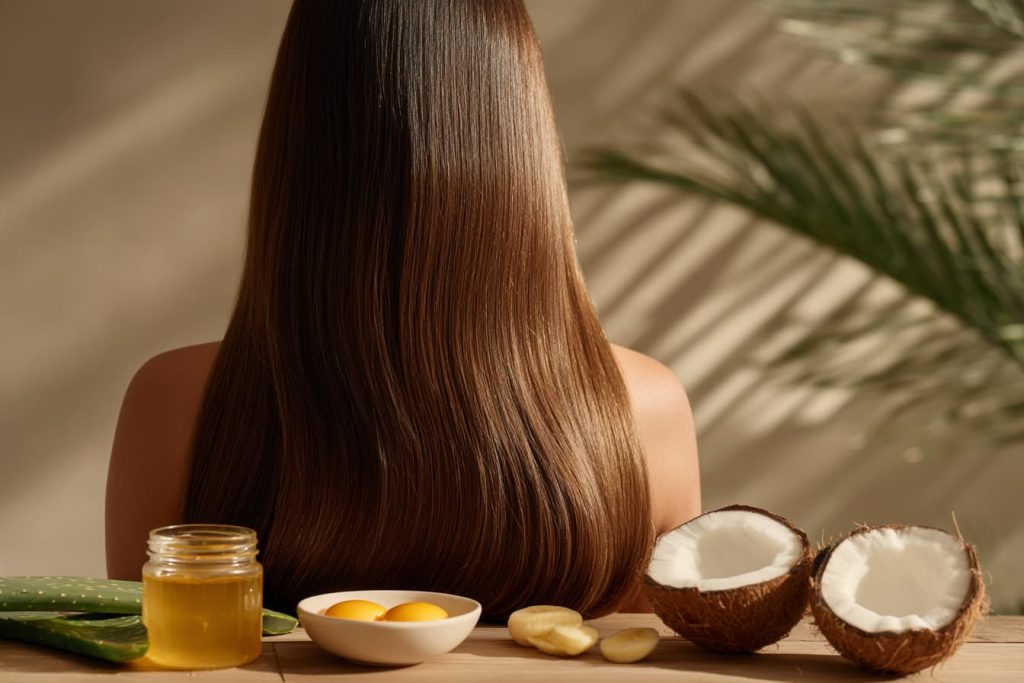
1. Aloe, Olive Oil & Egg Yolk Mask for Damaged Hair
Restorative, strengthening, deeply nourishing protein hair mask.
This classic treatment feeds the hair with proteins, fatty acids and hydrating enzymes.
Ingredients:
- 4–6 tbsp warm olive oil
- 4–6 tbsp aloe vera gel (fresh or store-bought)
- 2–3 egg yolks
How to use:
- Warm the olive oil gently.
- Whisk everything together until creamy.
- Apply to scalp and hair, massaging with fingertips.
- Cover with a shower cap.
- Leave for 1–2 hours.
- Rinse with lukewarm water and shampoo.
Best for:
Dry, brittle, bleached, chemically treated hair.
2. Banana & Vitamin Mask for Damaged Hair
Rich, luxurious, shine-boosting treatment for dry and damaged hair.
Banana smooths the cuticle, while Vitamins A & E deeply nourish.
Ingredients:
- 1 ripe banana, mashed
- 1 tsp wheat germ oil
- 1 capsule liquid Vitamin A
- 1 capsule liquid Vitamin E
How to use:
- Blend everything until completely smooth (very important to avoid banana bits!).
- Apply to scalp and hair.
- Leave for 30 minutes.
- Rinse thoroughly, then shampoo.
Tip:
Blend, don’t mash, blending prevents difficult-to-remove pieces.
3. Jojoba Oil & Honey Homemade Mask for Damaged Hair
Replenishing, softening, moisturizing and protective hair treatment.
Honey acts as a natural humectant, locking moisture deep inside the hair.
Ingredients:
- ¼ cup honey
- 2 tbsp jojoba oil
How to use:
- Warm honey slightly to make it liquid.
- Mix with jojoba oil.
- Apply to dry hair.
- Cover with shower cap.
- Leave for 30 minutes.
- Rinse and shampoo.
Best for:
Dull, frizzy, or sun-damaged hair.
4. Green Tea & Mustard Flour DIY Hair Treatment
Rejuvenating, invigorating and stimulating scalp treatment that supports healthy hair growth.
Green tea energizes the scalp, while mustard flour boosts circulation.
Ingredients:
- 2 tbsp powdered green tea leaves
- ¼ cup hot water
- 1 egg yolk
- 1 tbsp mustard flour
How to use:
- Mix green tea and hot water, let cool slightly.
- Add yolk and mustard flour.
- Apply to scalp and hair.
- Leave for 15–20 minutes.
- Rinse very well.
Note:
If you feel burning from mustard, rinse immediately.
5. Coconut Milk & Coconut Oil DIY Mask for Damaged Hair
Deep conditioning hair mask that can be used as an overnight hair treatment.
One of the most intensive homemade hair treatments for serious dryness.
Ingredients:
- Equal parts coconut milk & coconut oil (about 4–6 tbsp each)
How to use:
- Warm mixture gently.
- Apply to damp hair while warm.
- Cover with shower cap.
- Leave overnight.
- Shampoo in the morning.
Best for:
Curly, very dry, coarse, or heat-damaged hair.
Try our rose water guide for easy skincare & haircare uses.
6. Nourishing Herbal Oil Blend for Scalp & Hair
This deeply nourishing natural oil treatment for damaged hair helps restore shine, reduce dryness, and support a healthier scalp.
You’ll need:
- Olive oil
- Almond oil
- Sesame oil
- Essential oils: rosemary, lavender, rose, sandalwood (optional)
How to make:
Mix equal parts olive, almond, and sesame oils (for example, 10 ml of each).
If using essential oils, add 1 drop of essential oil per 10 ml carrier oil (keep it gentle).
How to use:
Massage into the scalp and hair lengths on dry hair.
Cover with a shower cap and leave on for 45–60 minutes.
Rinse and shampoo as usual.
Tip: Ideal for dry, dull, or chemically treated hair.
7. Herbal Vinegar Rinse for Shine & Strength
This herbal hair treatment helps balance the scalp, add shine, and smooth damaged hair cuticles.
You’ll need:
- Dried elderflowers (or chamomile as an alternative)
- Comfrey root (optional – external use only)
- Apple cider vinegar
How to make:
Add 2 tablespoons of dried herbs to 500 ml hot water.
Let steep for 30 minutes, then strain.
Add 3 tablespoons apple cider vinegar.
How to use:
Use as a final rinse after shampooing and conditioning.
Do not rinse out.
Note: If using comfrey, use only externally and avoid broken or irritated skin.
8. Banana or Avocado Repair Mask
A classic natural remedy for very dry and damaged hair.
You’ll need:
- 1 ripe banana or ½ ripe avocado
- 1 teaspoon almond oil
How to use:
Mash until completely smooth.
Apply to hair lengths (avoid the scalp if hair is fine).
Leave on for 20–30 minutes, then rinse and shampoo.
Best for: Brittle, over-processed, or heat-damaged hair.
9. Mayonnaise & Avocado Deep Conditioning Mask
This deep hair treatment provides intense nourishment and softness.
You’ll need:
- 2 tablespoons mayonnaise
- ½ ripe avocado (optional)
How to use:
Blend into a smooth paste.
Apply to mid-lengths and ends.
Leave on for 20–30 minutes, then shampoo thoroughly.
Best for: Thick, coarse, or extremely dry hair.
10. Shea Butter & Orange Juice Treatment
A nourishing weekly hair treatment that helps restore elasticity and shine.
You’ll need:
- 1 tablespoon shea butter (gently warmed)
- 1 teaspoon fresh orange juice
How to use:
Mix well and apply to hair lengths only.
Leave on for 20 minutes, then rinse and shampoo.
Tip: Avoid the scalp if you have sensitive skin, as citrus can be stimulating.
How to Use homemade Masks for damaged hair Properly For Best Results
✔ Apply to slightly damp hair
✔ Focus on mid-lengths & ends
✔ Wrap hair for warmth, improves absorption
✔ Rinse with lukewarm water
✔ Don’t over-shampoo (you’ll lose the benefits)
Frequency:
- Dry/damaged hair: 1–2 times per week
- Normal hair: every 10–14 days
- Oily scalp: focus on ends only
If your hair needs a detox before applying masks, check out our Bentonite Clay for Hair tutorial, ideal for cleansing buildup and refreshing the scalp.
Consistency matters.
For healthier hair, combine weekly hair treatments with:
- a balanced diet rich in fruits, vegetables, and healthy fats
- gentle hair handling
- regular movement and stress reduction
Safety Tips
- Always rinse hair masks with egg in cool/warm water, never hot.
- Mustard flour can irritate sensitive skin, test first.
- Coconut oil may weigh down fine hair, use less.
- If you have dandruff, avoid sugary ingredients like too much honey.
These homemade masks for damaged hair work best when used consistently as part of a gentle, natural hair care routine.
Repairing damaged hair often works best when combined with scalp-focused care. Alongside nourishing masks, natural scalp stimulation treatments using warming spices may help improve overall hair vitality.
Homemade damaged hair masks – FAQ
Can I use these homemade masks on color-treated hair?
Yes. All masks listed here are safe for color-treated hair. Ingredients like aloe, honey, banana, olive oil and coconut milk help restore moisture lost during coloring and protect the hair shaft. Avoid overly acidic ingredients if your color is fresh.
How often should I use a hair mask for damaged hair?
For dry or damaged hair, use a mask 1–2 times per week. Normal hair can benefit from a mask every 10–14 days. If your scalp is oily, focus on applying masks only to the mid-lengths and ends.
Can I leave a hair mask on overnight?
You can leave oil-based masks (like coconut milk + oil) overnight for deeper nourishment. Masks containing egg, mustard or honey should stay on for no more than 30–60 minutes and must be rinsed with lukewarm water.
Are banana hair masks difficult to rinse out?
Banana can be tricky to remove if not blended properly. Always puree the banana in a blender until silky smooth. Mashing by hand leaves chunks that stick to the hair.
Which mask is best for extremely dry or brittle hair?
The coconut milk & coconut oil mask is the most intensive option for very dry, coarse or heat-damaged hair. It deeply hydrates and helps reduce breakage. Use weekly for best results.