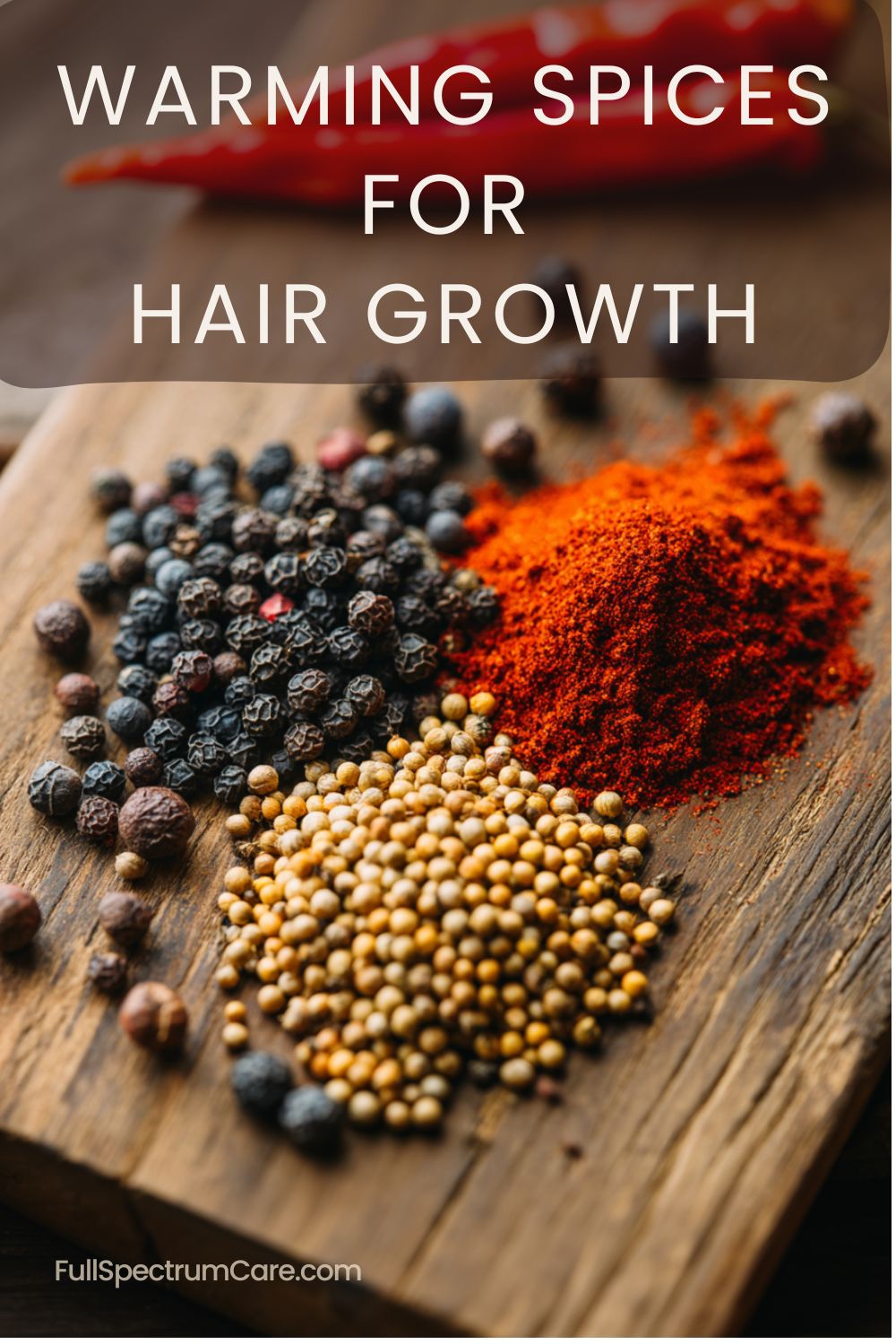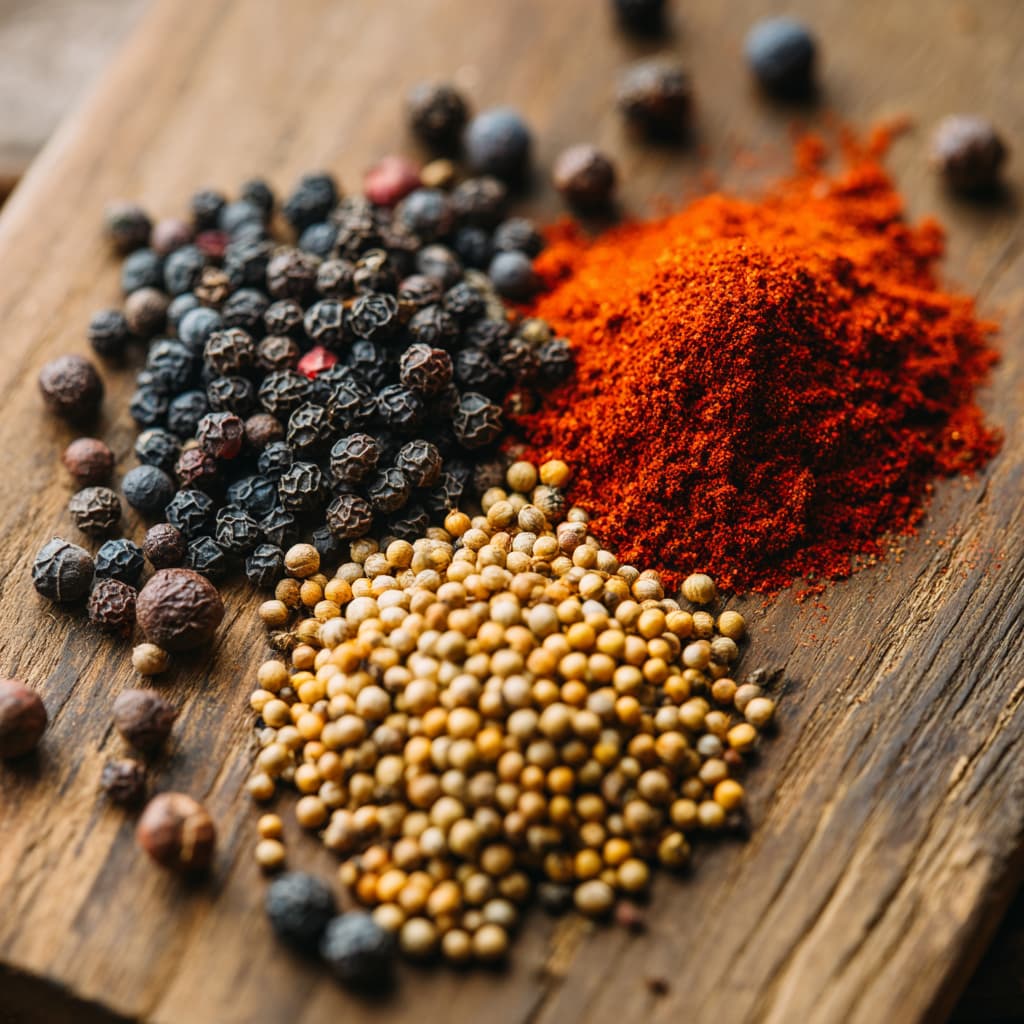

Warming spices like cayenne pepper, black pepper, and mustard seeds have been used for generations in natural hair care to stimulate the scalp and support healthy hair growth.
When used correctly, these warming spices for hair growth create a gentle heating sensation that may improve blood circulation to the hair follicles, an important factor for hair strength, vitality, and thickness.
This guide explores safe, traditional warming spice scalp treatments, explains how they work, and shows you how to use them without irritating or damaging the scalp.
Do Warming Spices Help Hair Growth?
Warming spices can support hair growth by stimulating the scalp and increasing blood flow to the hair follicles.
When applied externally and properly diluted, warming ingredients may:
- encourage scalp circulation
- support nutrient delivery to hair follicles
- help awaken sluggish or congested scalp areas
- improve scalp vitality for healthier-looking hair
These treatments are especially popular for thinning hair, slow hair growth, and dull strands, but they must be used carefully.
Improved scalp circulation works best when combined with nourishing ingredients, such as sulfur-rich compounds found in natural MSM hair treatments.
Are Warming Spices Safe for the Scalp?
Warming spices can irritate the scalp if misused. Safety and proper dilution are essential.
Important safety guidelines before you start:
- Always dilute spices in oils, honey, yogurt, or other soothing ingredients
- Never apply spices directly to the scalp
- Avoid contact with eyes or broken skin
- Always perform a patch test
- Do not exceed recommended application times
- Use warming treatments occasionally, not daily
- If you have scalp conditions, consult a healthcare professional
A warming treatment should feel stimulating, never painful or burning.
Cayenne Pepper & Capsicum Scalp Treatments
Cayenne pepper contains capsaicin, a compound known for its warming effect and ability to stimulate circulation. According to Cleveland Clinic, capsaicin is commonly used in topical applications to promote blood flow and nerve stimulation.
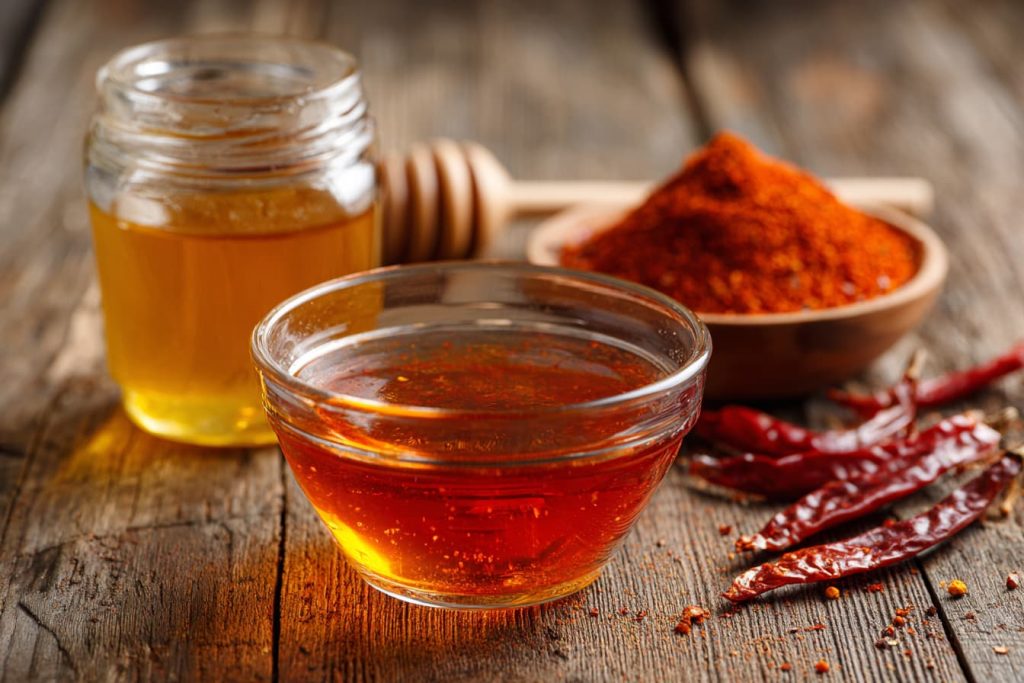
DIY Cayenne Scalp Oil for Thinning or Weak Hair
Ingredients
- 10 drops capsicum essential oil
- 15 tablespoons sweet almond oil
How to use
Mix the oils in a dark glass bottle. Massage a small amount into the scalp for about 5 minutes before washing your hair.
Use once weekly.
Stimulating Cayenne Treatment for Hair Loss
Ingredients
- 5 tablespoons vodka
- ½ teaspoon cayenne pepper
- 2 tablespoons almond oil
How to use
Mix well and apply to the scalp with gentle circular motions. Massage briefly, then shampoo immediately.
Use no more than once every 10–14 days.
Warming Hair Mask for Growth & Darker Appearance
Ingredients
- ½ teaspoon cayenne pepper
- 4 tablespoons raw honey
- 1 tablespoon castor oil
- 1 tablespoon sesame oil
- 1 tablespoon coconut oil
How to use
Gently warm the oils, then mix with honey and cayenne. Apply to the scalp and hair. Leave uncovered and rinse after 20 minutes, then shampoo.
DIY Thickening Treatment for Fuller-Looking Hair
Ingredients
- 10 g gelatin
- 2 tablespoons jojoba oil
- 1 teaspoon cayenne pepper
How to use
Soak gelatin in water until absorbed, then mix with oil and cayenne. Apply to scalp and hair, rinse after 20 minutes.
Gelatin helps add temporary thickness and texture to hair strands.
Does Cayenne Pepper Actually Stimulate Hair Growth?
Cayenne contains capsaicin, which creates a warming sensation that may increase scalp circulation. While it does not create new hair follicles, improved blood flow can support healthier hair growth when used occasionally and safely.
Black Pepper Hair Masks
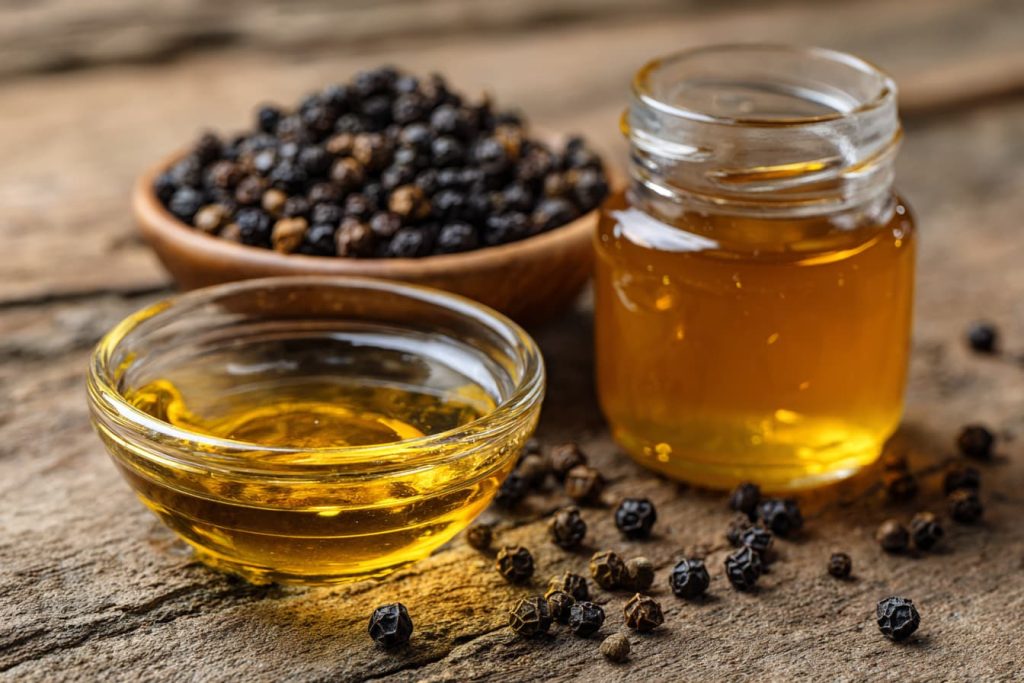
Black Pepper Mask for Darker, Nourished Hair
Ingredients
- ½ teaspoon ground black pepper
- 1 cup plain yogurt
Massage into the scalp and hair lengths. Leave on for up to one hour, then shampoo.
Black Pepper Mask for All Hair Types
Ingredients
- 4 tablespoons cottage cheese
- 1 teaspoon ground black pepper
- ½ teaspoon orange juice
Massage into the scalp for 10 minutes, then apply to hair lengths for another 10 minutes. Rinse and shampoo.
Mustard Seed Scalp Mask for Oily or Sluggish Scalp
Ingredients
- 2 tablespoons powdered mustard seeds
- 1 egg yolk
- 2 tablespoons extra virgin olive oil
- 2 tablespoons hot water
Mix gradually and apply while warm. Cover with a shower cap and rinse after 15 minutes.
Mustard seed masks are often used to stimulate circulation and regulate excess scalp oil.
Soothing Final Hair Rinse
Ingredients
- 1 liter lukewarm mineral or spring water
- 10 drops essential oil of choice
Pour over scalp and hair after washing. Do not rinse.
Gentle Alternatives for Sensitive Scalps
If warming spices feel too intense, consider gentler scalp stimulation methods:
- rosemary or peppermint hydrosol
- castor oil with highly diluted rosemary essential oil
- regular scalp massage without heat
If your scalp reacts strongly to heat-based treatments, gentler options like bentonite clay hair treatments may help detox and rebalance the scalp.
Healthy hair growth is a long-term process — consistency matters more than intensity.
Warming spice treatments can support scalp stimulation and healthier-looking hair when used responsibly. Proper dilution, limited frequency, and listening to your scalp are key.
If you experience burning, redness, or discomfort, discontinue use immediately and switch to gentler alternatives.
For hair that needs extra moisture and repair, homemade masks for damaged hair can complement scalp-focused treatments.
FAQ – Warming Spices for Hair Growth
Do warming spices really help hair grow faster?
Warming spices may help stimulate scalp circulation, which supports healthier hair growth. They do not create new hair follicles, but improved blood flow can help nourish existing ones.
Is cayenne pepper safe to use on the scalp?
Cayenne pepper can be safe when properly diluted and used occasionally. It should never be applied directly to the scalp and should always be patch tested first.
How often should warming spice scalp treatments be used?
Most warming spice treatments should be used no more than once a week, while stronger treatments should be limited to once every 10–14 days.
What should I do if my scalp burns after a warming treatment?
If you experience burning, redness, or discomfort, rinse immediately and discontinue use. Switch to gentler scalp stimulation methods.