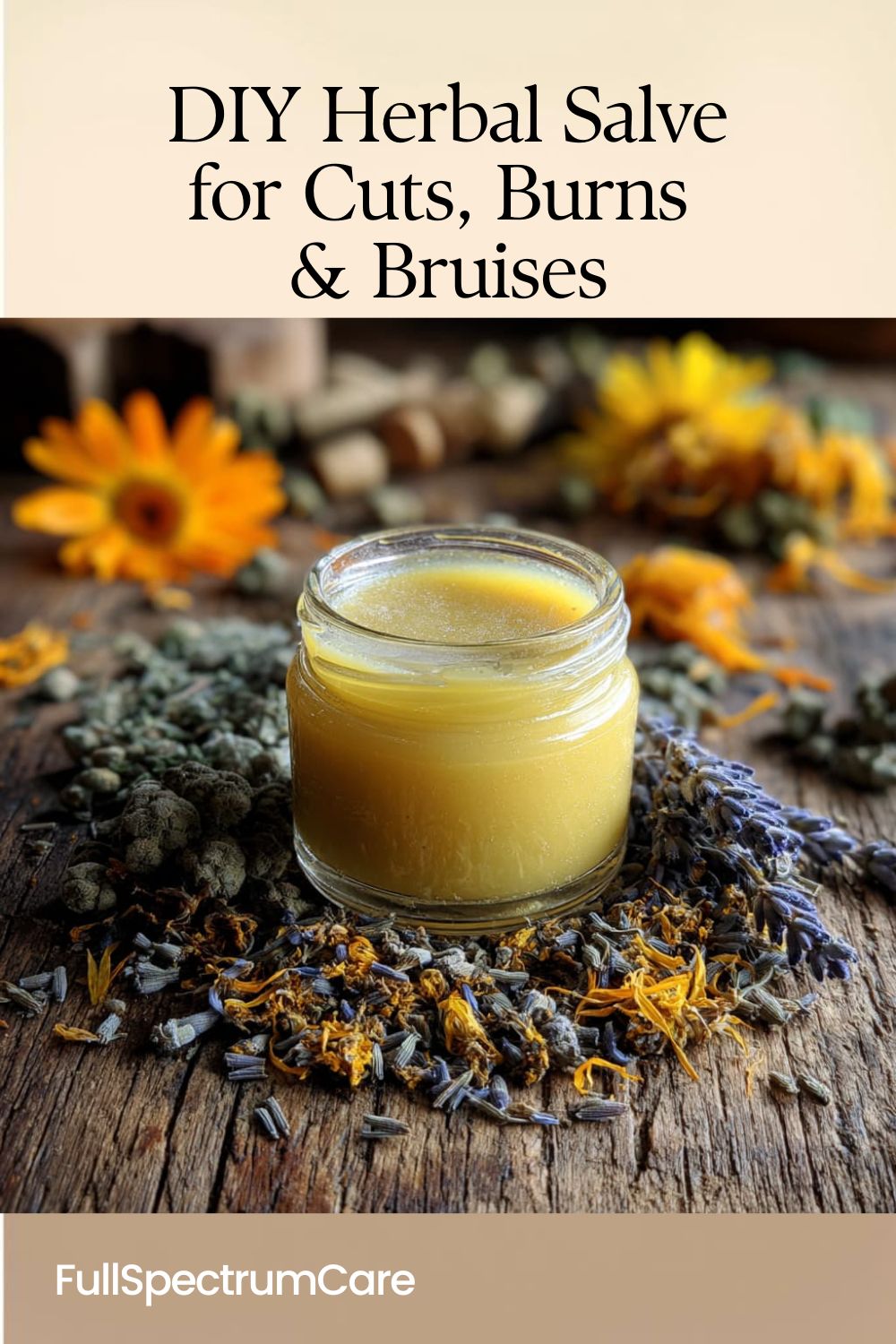
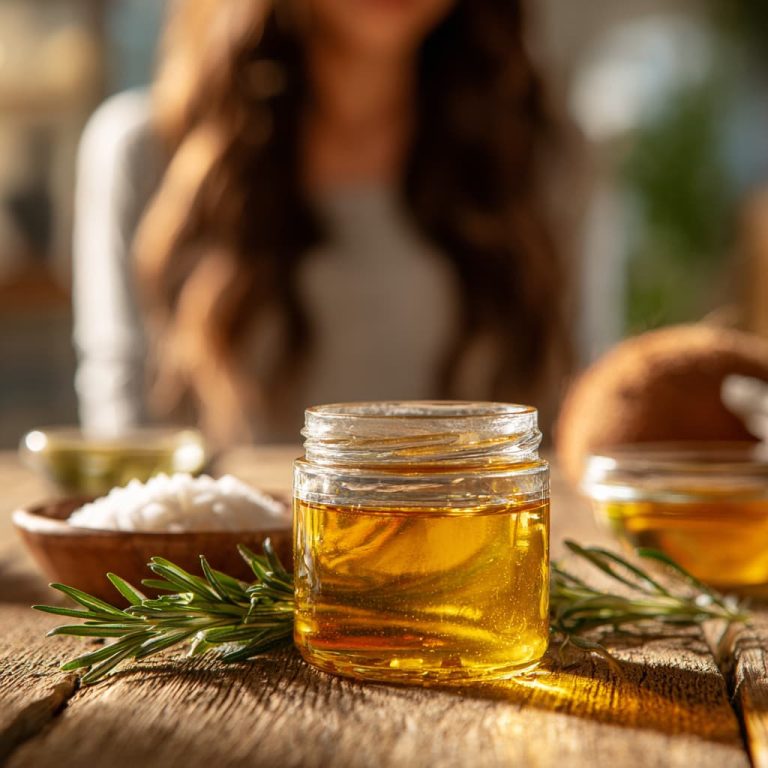
If you’re looking for a gentle, all-purpose herbal salve recipe you can make at home, this one is simple and effective. It’s perfect for minor cuts, burns, bruises, dry skin, and everyday first-aid needs. It uses only a few natural ingredients and takes less than 30 minutes to prepare.
Herbal salves are one of the most practical natural remedies to keep in your home first aid kit. They combine the soothing and healing power of herbs with the protective qualities of natural oils and beeswax, creating a gentle balm that supports skin recovery. From small cuts and burns to bruises and irritated skin, a well-made salve can be a family essential.
Explore our full Natural Remedies library for additional support.
This herbal salve is commonly used for:
- Minor cuts and scrapes
- Small burns and sunburn
- Bruises and sore skin
- Dry, cracked hands and lips
- Everyday natural first-aid care
Why Keep a Herbal Salve at Home?
- Antiseptic action: Certain herbs and oils have natural antimicrobial properties.
- Soothing relief: They calm redness, itching, or stinging.
- Skin regeneration: Herbal salves promote the natural healing process.
- Family-friendly: Safe for children and those with sensitive skin (with proper patch testing).
Why Herbal Salves Work
Herbal salves combine infused plant oils with natural waxes to create a protective, soothing barrier on the skin. The herbs support skin repair, while the oils and wax help lock in moisture and protect the affected area as it heals.
Key Healing Ingredients in DIY Herbal Salves
Calendula (Marigold)
Known for its powerful anti-inflammatory and skin-regenerating properties, calendula helps soothe minor cuts, scrapes, and burns. It also reduces redness and supports faster tissue recovery.
Plantain Leaf
A traditional wound-healing herb, plantain is rich in allantoin and tannins, which calm itching, reduce swelling, and draw out irritation from insect bites or rashes.
Comfrey
Sometimes called “knitbone,” comfrey has been used for centuries to help with bruises, sprains, and skin injuries. It contains compounds that may support tissue repair and reduce inflammation.
Lavender Essential Oil
Lavender brings gentle antiseptic and antimicrobial effects, while its aroma provides calming aromatherapy benefits. It’s especially useful for burns and skin irritations.
Beeswax & Olive Oil (Base)
The foundation of the salve. Olive oil carries the infused herbs into the skin, while beeswax thickens the mixture into a protective balm and helps it stay on the skin longer. Coconut oil can also be used for its antimicrobial and moisturizing properties.
Boost your immunity with our soothing recipe for a Homemade Cold and Flu Syrup.
DIY Herbal Salve Recipe
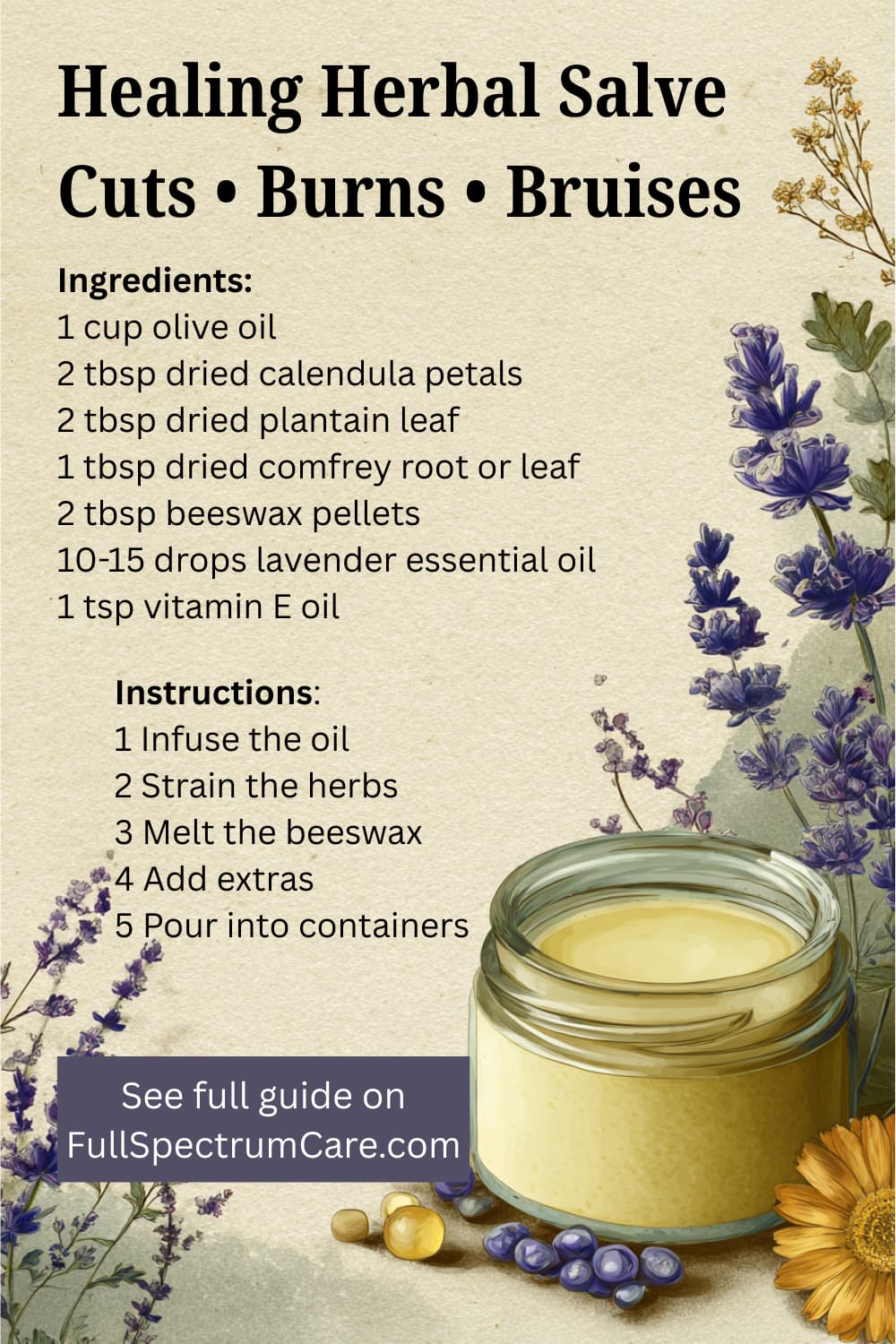
Ingredients:
- 1 cup olive oil (or coconut oil)
- 2 tbsp dried calendula petals
- 2 tbsp dried plantain leaf
- 1 tbsp dried comfrey root or leaf
- 2 tbsp beeswax pellets
- 10-15 drops lavender essential oil (optional)
- 1 tsp vitamin E oil (optional, for preservation)
Instructions:
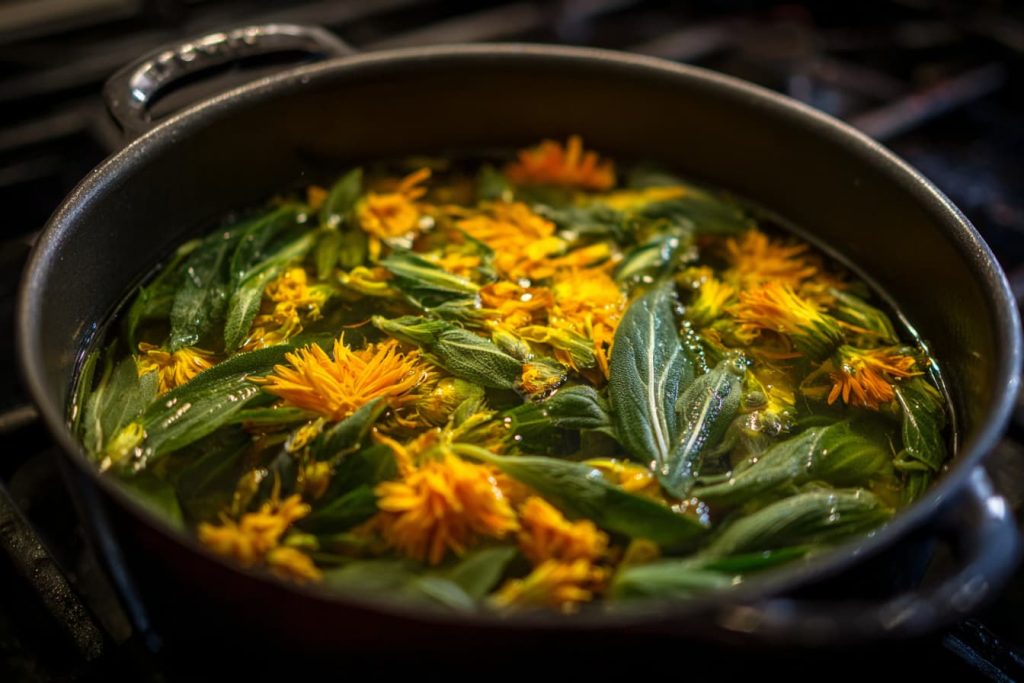
- Infuse the oil: Place the dried herbs in a clean jar, cover with olive oil, and let sit in a warm spot for 2-3 weeks. For a faster method, use a double boiler on low heat for 1-2 hours.
- Strain the herbs: Once infused, strain the oil through a fine mesh or cheesecloth into a heat-safe bowl.
- Melt the beeswax: Return the infused oil to gentle heat, add beeswax pellets, and stir until melted.
- Add extras: Remove from heat and stir in lavender essential oil and vitamin E, if using.
- Pour into containers: Transfer the liquid salve into clean glass jars or tins. Allow to cool and solidify.
Quick Tip:
If this is your first time making a salve, start with calendula only. Single-herb salves are gentler and easier to customize later.
How to Use the Salve
- Apply a thin layer to cuts, scrapes, minor burns, bruises, or dry patches of skin.
- Use as a protective balm for chapped hands, heels, or lips.
- Suitable for daily use on minor skin issues.
Storage & Safety Tips
- Store the herbal salve in a cool, dry place away from direct sunlight.
- Shelf life: 6-12 months (longer if stored in the fridge).
- Always do a patch test before using, especially for children or sensitive skin.
- Not suitable for deep wounds, severe burns, or infected injuries.
- Avoid if allergic to any ingredient (especially beeswax or specific herbs).
Variations of Homemade Herbal Salves
- Comfrey & Arnica Salve: Add dried arnica flowers for extra bruise-soothing properties.
- Tea Tree Salve: Add a few drops of tea tree essential oil for a stronger antimicrobial effect.
- Vegan Option: Replace beeswax with candelilla wax.
Herbal salves are a simple, empowering way to care for your family naturally. With just a few herbs, oil, and beeswax, you can create a healing balm that supports skin recovery, soothes discomfort, and brings a touch of nature’s pharmacy into your home.
If you struggle with tension or stress, try these Soothing Natural Remedies for Headaches or If you enjoy creating simple remedies at home, you may also find these remedies for bloating and indigestion helpful for everyday wellness support.
For additional guidance, Healthline provides a clear overview of how to make an herbal salve at home using simple ingredients.
Disclaimer: This herbal salve recipe and information are for educational purposes only. DIY herbal salves are suitable for minor wounds and irritations. For serious injuries or infections, please consult a healthcare professional.
Frequently Asked Questions
How long does homemade salve last?
Homemade herbal salves typically last 6-12 months when stored in a cool, dark place. Adding vitamin E oil can help extend shelf life.
Can I make a salve without beeswax?
Yes. You can replace beeswax with candelilla wax for a vegan option or use shea butter for a softer consistency.
Is calendula safe for sensitive skin?
Calendula is generally gentle and safe for most skin types, but it’s best to do a patch test first, especially on sensitive skin or children.
What is the difference between salve and balm?
They are essentially the same: an oil-based preparation thickened with wax. Some use “balm” for aromatic blends and “salve” for medicinal blends.